
Study: Google's $1.50 Hotdog
Searching on Smartphones
Let's go back to somewhere around 2014. This was a period when smartphone usage proliferated, it was estimated that half of the world’s used a smartphone, and the trend was not stopping.
Search has been Google’s main product and the smartphone posed a major threat. Typing queries into a text box and clicking on links is a very desktop-suited experience, but on smartphones native apps offered a superior experience.
During that time, the argument was that if the mobile apps experience made more sense for users, then advertisers would follow, making mobile app advertising a disruptor to Google Search.
This wasn’t a far fetched idea. The tech industry saw it with Microsoft's failure to capture the operating system in smartphones.
So the threat was real, but how did Google evade and survive this challenge?
Knowledge Panels
Google came up with this thing called Knowledge Panels. See these small areas of information embedded within the search result? They effectively act like mini-apps:
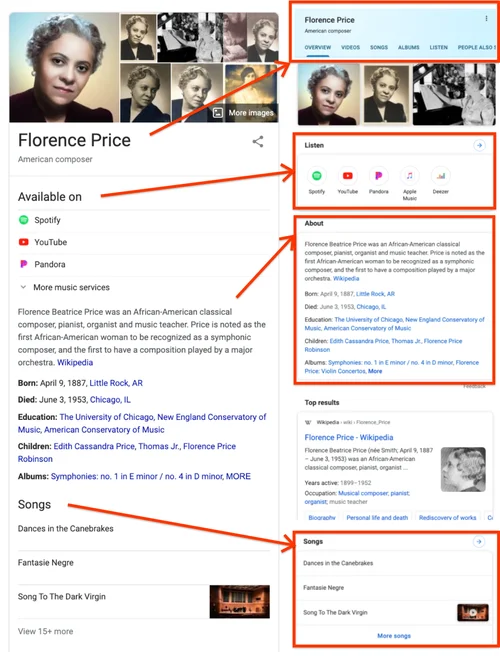
This circumvented the need for users to download different apps. We had a chat with someone who worked on this project in 2014, and it was a fascinating lesson on how the correct incentives produce best results.
During that time, the VP of Engineering set ambitious targets on how much traffic Knowledge Panels should take from traditional Search.
One engineer asked if that would be detrimental to Google’s revenues as a whole.
Obviously, every high level executive had stock options whose valuation depended on how much money Google made. So shouldn’t they be worried about taking traffic away from Search?
Instead, the VP answer was literally “dont worry about the money”.
That is some powerful incentives alignment. His incentives was not tied to the sales performance of Google, rather it was based on the impact and effectiveness of Knowledge Panels.
In essence, the VP's job was to kill the blue-links in Search.
Does this ring a bell?
Yes, it's the same idea when Jeff Bezos asked Steve Kessel to kill the physical book business and invent a digital one in 2004. And thus Kindle was born.
There were also other initiatives like Voice Search, Web Answers, and PageSpeed. All these kept Google Search relevant in the age of smartphones.
Sundar Pichai took over as CEO from co-founder Larry Page in 2015. Before his promotion, Pichai's area of expertise was Search and his business acumen proved to be brilliant.
The monetization rate on smartphones is very low at 0.02%, compared to 1.8% on desktop. But the insight was that there are so many more queries users make through a device that’s always in their pocket.
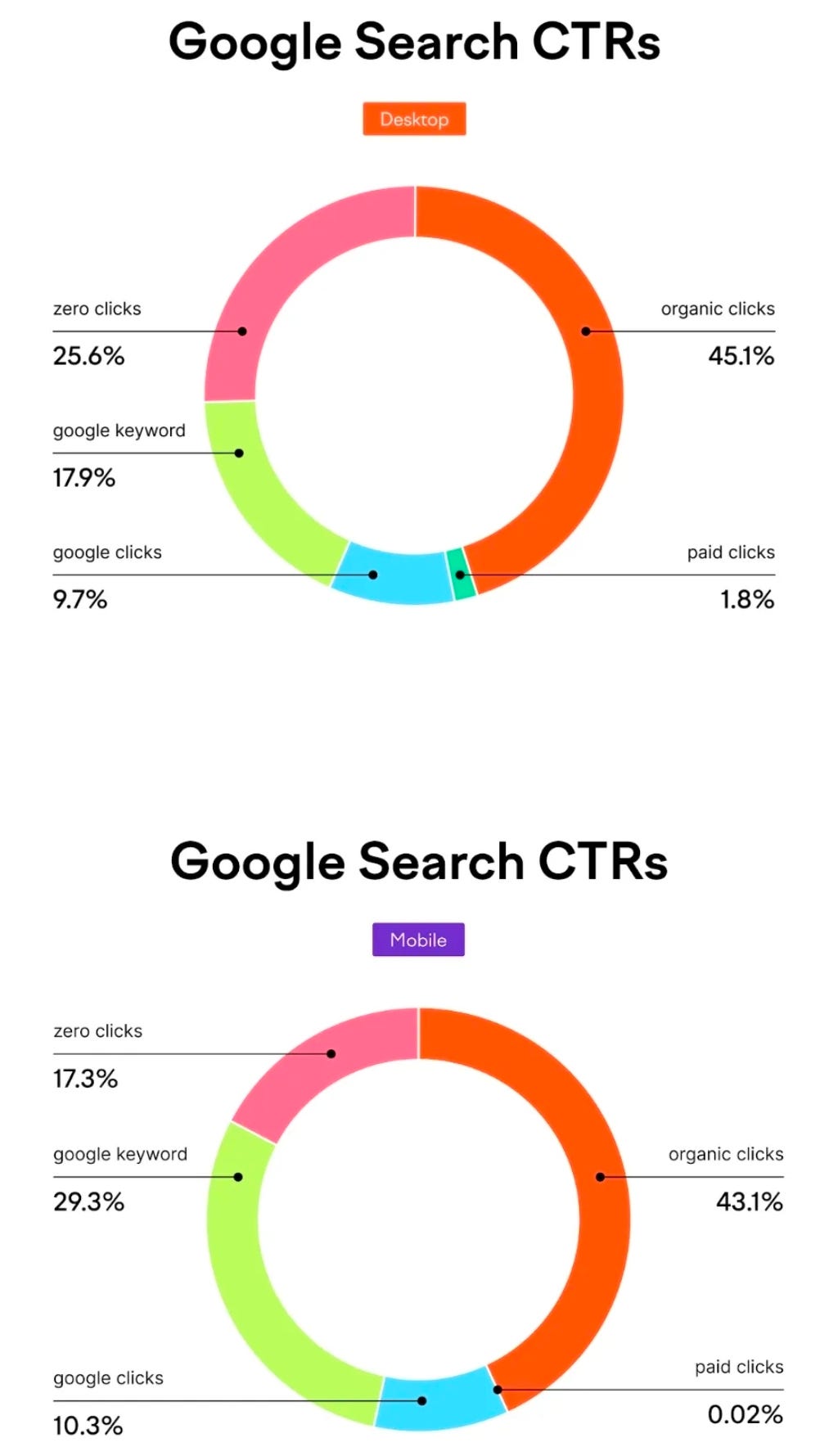
Only 43.1% of mobile searches led to users leaving to an external website either through an organic or paid links. The remaining 56.9% of searches were free; Google works hard to satisfy our needs without making a cent!
This is analogous to how retailers like Costco use $1.50 hotdogs to keep customers loyal. It's a loss-leader strategy.
Google was correct that user loyalty results in long-term monetization that outweigh short-term pain, and so they were able to escape the Innovators’ Dilemma by disrupting themselves.
Round #2: AI
The interesting discussion today is whether Google is facing the same problem again — this time in the form of AI?
Well, Google is once again transforming Search. Today it’s called Generative Search Experience (GSE). We see features like:
AI Overviews
AI Mode
Google Lens
Circle to Search
All of these aim to keep Search relevant in the age of AI.
Now, we don’t know if the incentives are being set like in 2014 “don’t worry about the money”. But we do get insights from Elizabeth Reid (VP, Search) from her interview with Financial Times:
There are a lot of opportunities for ads. We show them both above and below in AI Overviews, but also within. Ads are relevant whenever users are going to make a choice that has some commercial aspect.
When a query is predominantly commercial intent, like we think you want to buy something, then we might often show ads. But sometimes we think you probably don’t want to see ads, and so we don’t want to give everyone ads.
But some people might want to buy something. If you search “how to clean a stain out of the couch” and the first thing we show is a bunch of ads, you’re like, “Whoa, I just wanted some advice.”
But if we’re giving you ideas and then we say, “if you’re having trouble you might want to consider a stain-remover product”, and then we give you some ads for stain-remover products, it feels natural and in context. And so, there are new opportunities.
Obviously, AI search cost more for Google but it seems like they have no issues subsidizing. Whether this works or not remains to be seen, but we are optimistic about how Google is willing to transform itself to keep customers loyal on Search.
For all we know, the $1.50 hotdog is coming out again!
Thanks! Great insights. Personal anecdote suggesting googles AI search strategy is working. I suspected that a transformer for my LED lighting strip had died. Last time, I paid an electrician $$$ to come and change the box. This time, I used Google Lens to identify the transformer and its specifications. GOOGL gave me options to buy on-line. I asked for local suppliers and got directed to a close by electronics supplier. Cost me $ (not quite $1.5….)
Great read! Thanks for sharing