
Study: Never Bet Against America
Global Power Switching Hands?
In recent history, the US has done many things on the global stage that would undermine itself. Costly decisions like war in the Middle East since the invasion of Iraq in 2003, which was estimated to cost $8 trillion with over 940,000 casualties.
Trade wars with China and the recent tariffs imposed on its own allies continues to strain political relationships. In 2025, the Trump tariffs was estimated to increase average tax by $1,000 per US household. Currently, all countries are facing 10% tariffs with Trump threatening to increase it to 15%. Even Switzerland faced 39% tariffs before the new 15% came through.
Domestically, the US national debt grows every year to all time highs and America owes the largest external debt, almost all foreign countries are holding Treasuries which are being repaid with depreciating dollars.
Additionally, in recent decades, aging demographics and rising healthcare costs have led to concern about the long-term sustainability of America's fiscal policies. In 2024, federal interest payments on the national debt surpassed spending on both Medicare and national defense.
Despite all these negatives, America has been and still is the world’s superpower at least since the World Wars.
It is also the richest country home to the largest companies and financial markets.
America's GDP is far ahead of developed countries with China catching up:
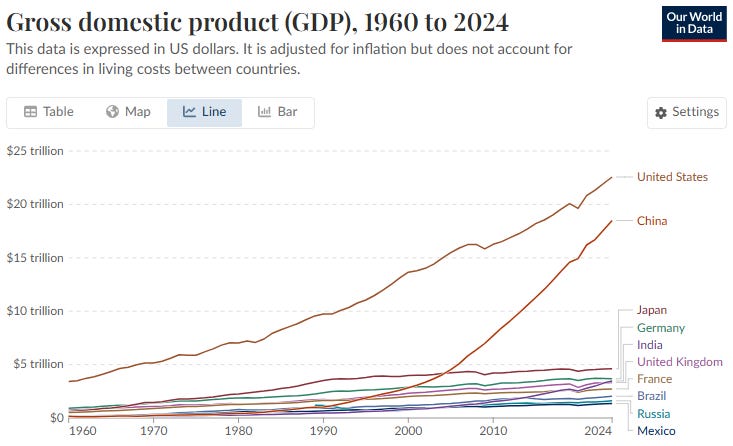
On a per capita basis, the US is also on top. In fact, for over 200 years America’s GDP has compounded at 2% per year without much deviation.
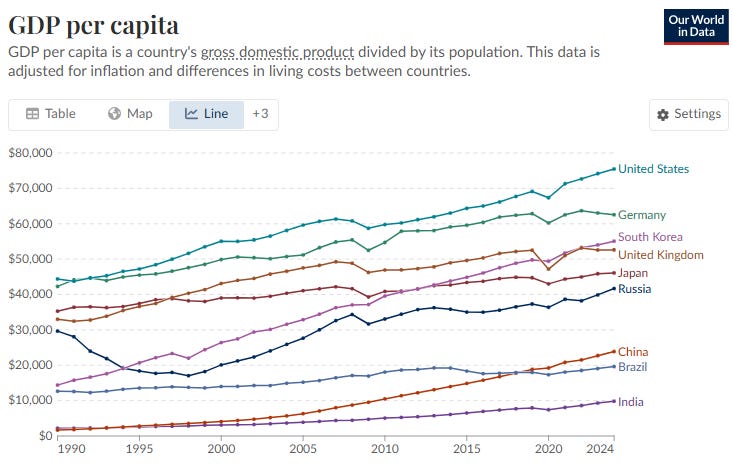
Why is America able to protect its wealth for so long?
Many cite reasons like the rule of law, democracy, entrepreneurial culture, strong technology and military might. However, these factors can be threatened and it can also fail due to bad leadership. If we look at the share of global GDP, China is rapidly catching up — should this be a source of worry that the world’s superpower will eventually change hands?
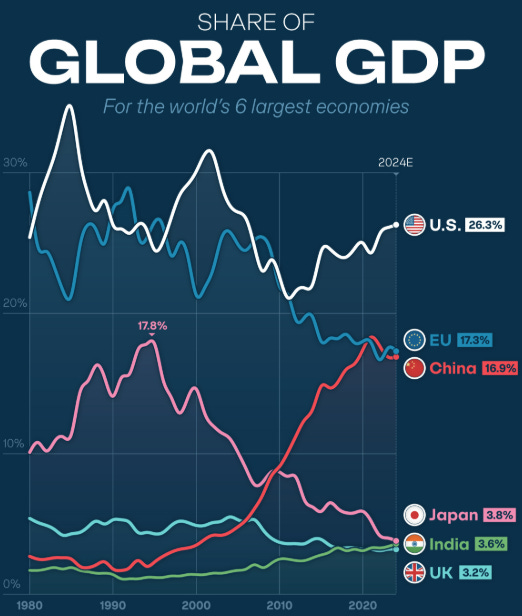
We don’t think so, at least for the duration of our investing lifetime. Because there is one factor that’s not frequently discussed, and it directly contributes to the power and growth of the US.
Geography
Mississippi Basin
The size of America is 4ᵗʰ largest in the world by surface area, but size alone is not sufficient if the land is not productive. This is where we examine the natural gifts of the Mississippi Basin.
The Mississippi Basin is the 4ᵗʰ largest drainage basin and occupies 40% of the contiguous 48 US states, touching 32 out of 50 states. It is between two famous mountain ranges: To the west Sierra Nevada, Rockies, and to the east Appalachians.
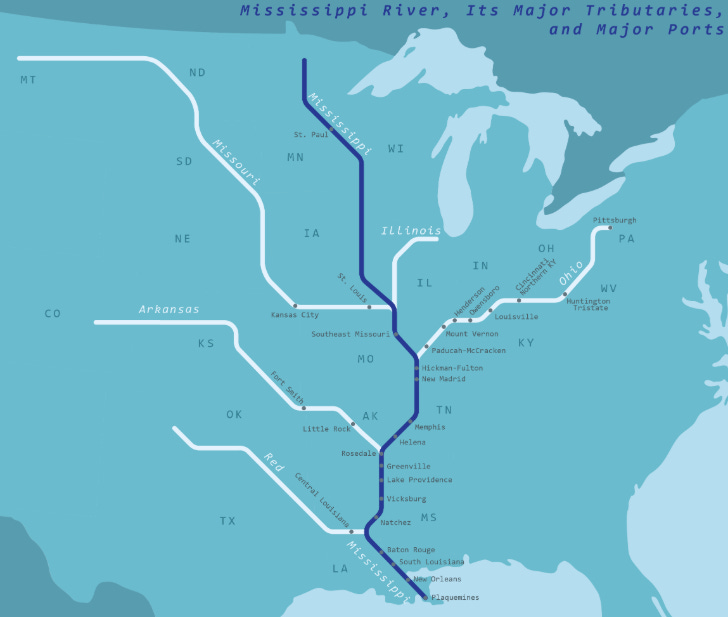
This map illustrates the vast extent of the Mississippi Basin and its tributaries. The rivers are extremely meandering, often flowing 1,300 miles to cover a straight-line distance of only 675 miles, as a result it is naturally well irrigated and the land is super fertile:
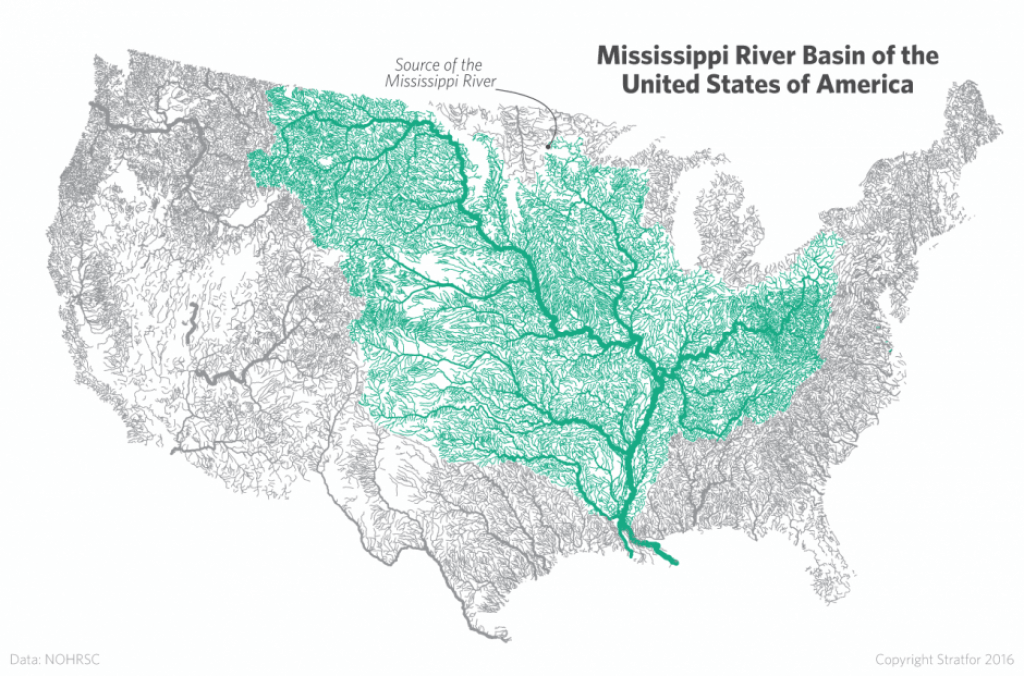
More importantly, the major riverways are navigable with the main vein stretching from the port of St. Paul to Plaquemines, ending near the Gulf of Mexico in Louisiana. The entire river system is over 15,000 miles with navigable parts covering 1,300 miles:
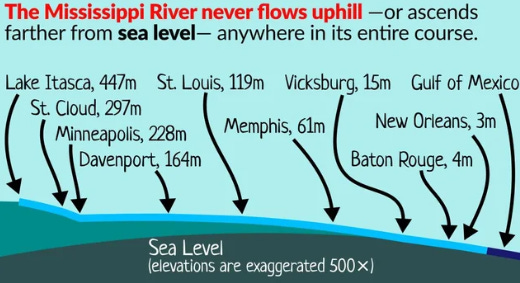
Better still, the elevation is very flat, continuously decreasing only 447m from source to mouth. This means the water speed is slow and easy to navigate.
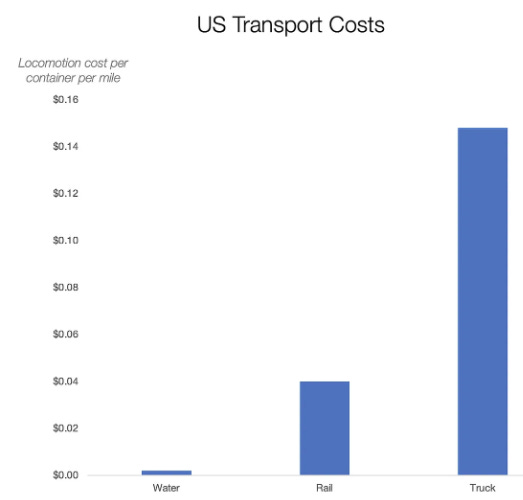
Navigable rivers are important because moving goods over water is 10 to 30 times cheaper than land transportation.
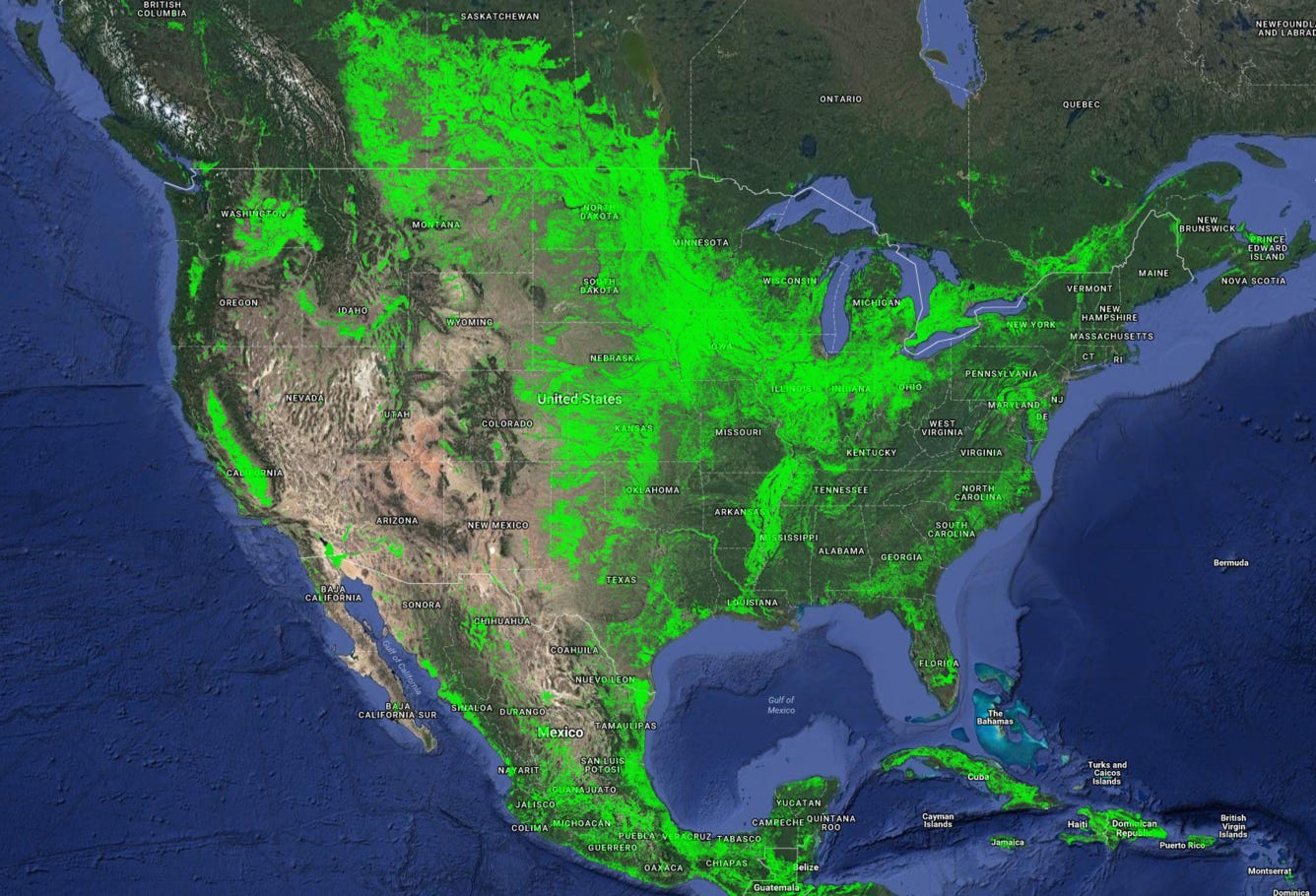
Majority of cropland are within 200km of a navigable river. The numerous ports allow for cheap transportation domestically, as well as exporting out of the Gulf of Mexico.
Some countries have very long coastlines but no internal riverways. An obvious advantage of rivers is that it has twice the serviceable area: two banks instead of one. Rivers also don’t have big tidal waves or storms.
It is no surprise that the Mississippi Basin is home to the world’s second largest piece of cropland. The US has 166 million hectares of net cropland area and is ranked second in the world after India, which has 180 million hectares.
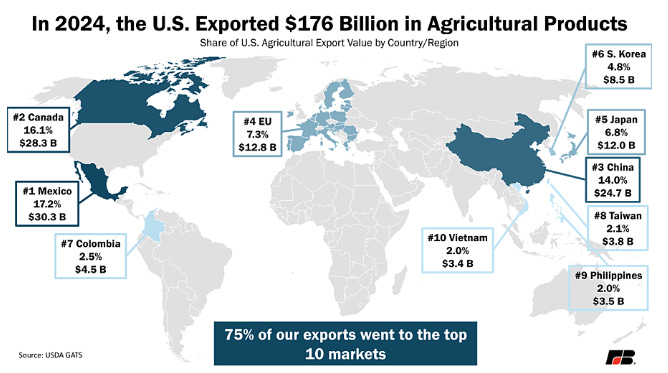
Because of all these factors, the US is the third largest producer of food worldwide (China #1, India #2) and in 2024 it exported $176b in agricultural products to a total of 189 countries.
Consider Europe, where the Alps dominate the center and rivers flow outwards to neighbouring countries. They lack common economic incentives. Meanwhile, the Mississippi Basin is one big system which makes all the inhabitants part of the same economic system.
Another geographical advantage that allows for cheap water transportation is the linkage to the Great Lakes:
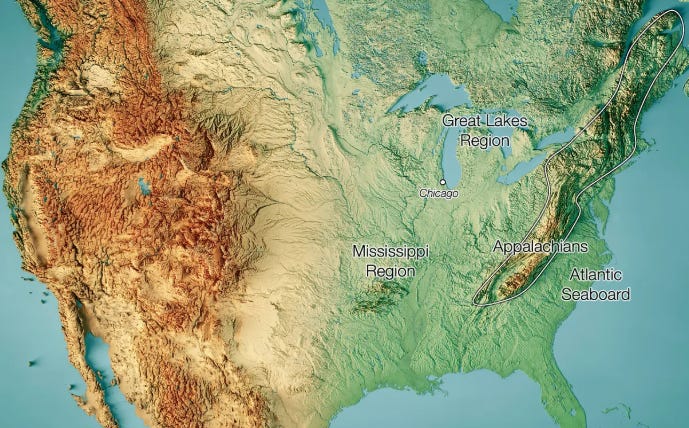
To access the Atlantic ocean, New York built the Erie Canal in 1825. It was the first navigable waterway connecting the Atlantic to the Great Lakes, vastly reducing the cost of transportation across the Appalachians.
However, the Great Lakes are not naturally navigable due to ice and obstacles like the Niagara Falls. Canada played a central role in constructing the St. Lawrence Seaway in 1959 to connect the Great Lakes and Atlantic ocean. They operate 13 of the 15 locks in the systems, including the vital Welland Canal, which bypasses Niagara Falls.
The seaway cost C$470m, of which C$336.2m was paid by Canada. Despite paying most of the bill, the benefits of this seaway accrued disproportionally to America due to the warmer climate.
Intercoastal Waterways
Apart from the navigable river systems, did you know that ships can travel from Boston to Mexico without going into open seas?
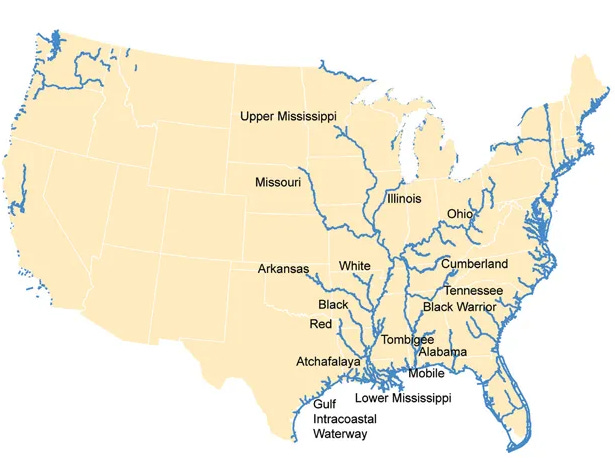
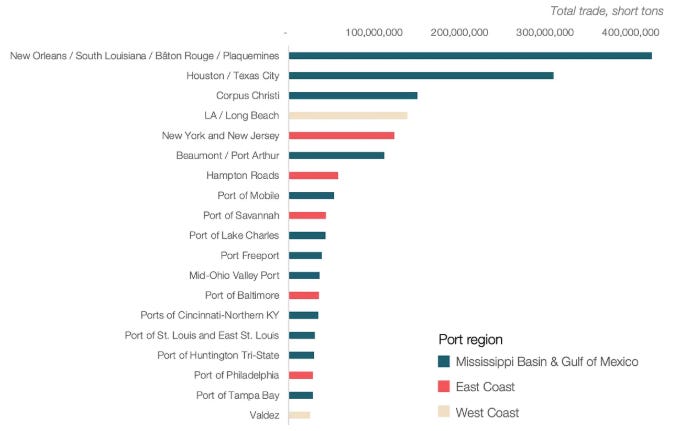
This is why most of the biggest ports are in the Mississippi Basin or Gulf of Mexico:
The ports on the East coast form big estuaries that protect them from tides. Take a look at New York’s port:
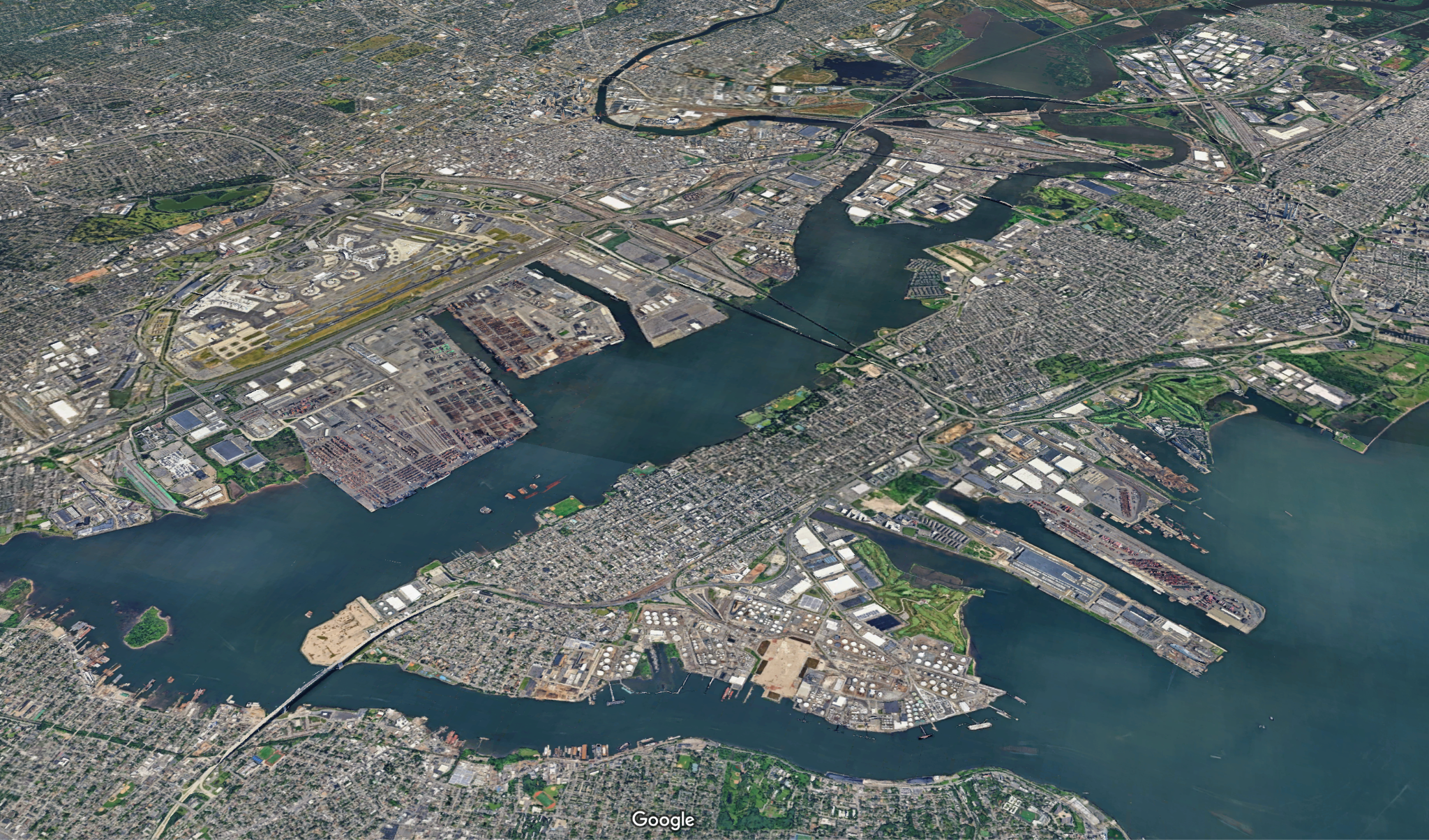
Therefore, the combination of Mississippi Basin and coastal waterways produce a geographical advantage that cannot be destroyed or replicated. This results in fertile land for food production, cheap transportation and ports open to trade with the world.
Oil & Gas
The formation of oil and gas reserves are formed over millions of years.
This was how the America landmass looked like 77 million years ago:
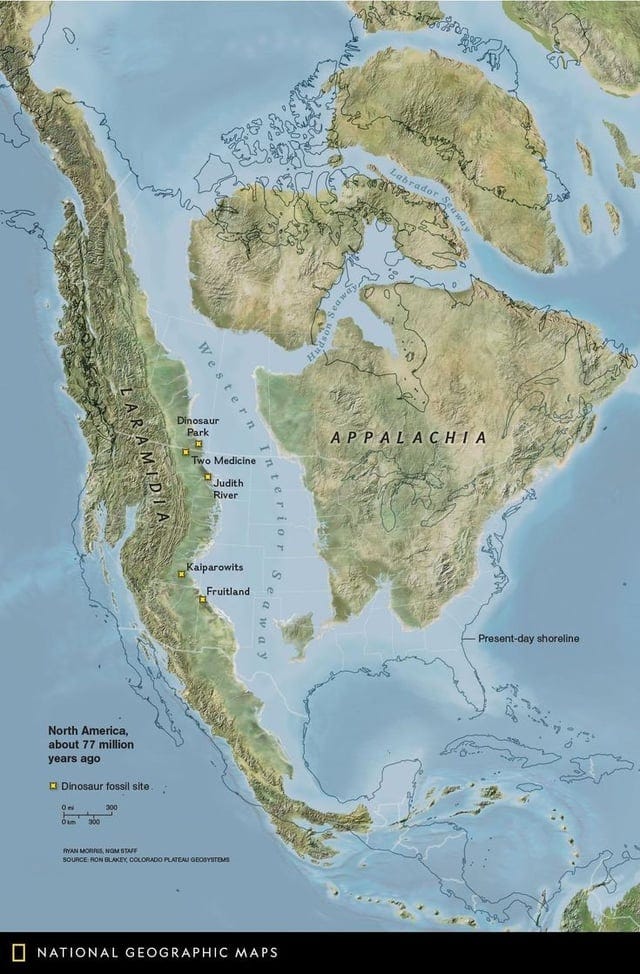
Shallow inland sea bred life and dead creatures fell to the shallow seabed. Silt and sand covered their corpses, as time passed they got buried deeper and deeper. After millions of years the immense pressure and heat turned the remains into hydrocarbon resources.
As a result, the US was gifted to be amongst the top 10 producers of both oil and gas. They have ~5.3% of global natural gas reserves and produces 16% to 22% of global daily oil output.
Oceans & Mountains
The west coast faces the Pacific ocean, while the east faces the Atlantic. Both are deep, treacherous and thousands of miles wide. Surely, it’s not easy to launch a naval attack.
Even if invaders crossed the oceans, they are faced with West Rockies mountains and East Appalachians.
On the northern side, we have Canada with a population of only 42 million compared to America’s 344 million, despite both countries having almost equal land area. This is because Canada is mostly frozen desert, with unproductive land limiting its agricultural potential. As a result, most of Canada’s population is spread across Vancouver, Palliser’s Edges and St Lawrence Valley, all of them disconnected with each other.
Finally, the south borders Mexico. Back in 1846, the US-Mexico war concluded with the annexation of Texas:
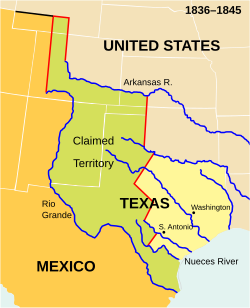
This effectively pushed the border farther south and made the passage narrower. It also pushed it farther away from the key port of New Orleans, which is where the Mississippi River ends.
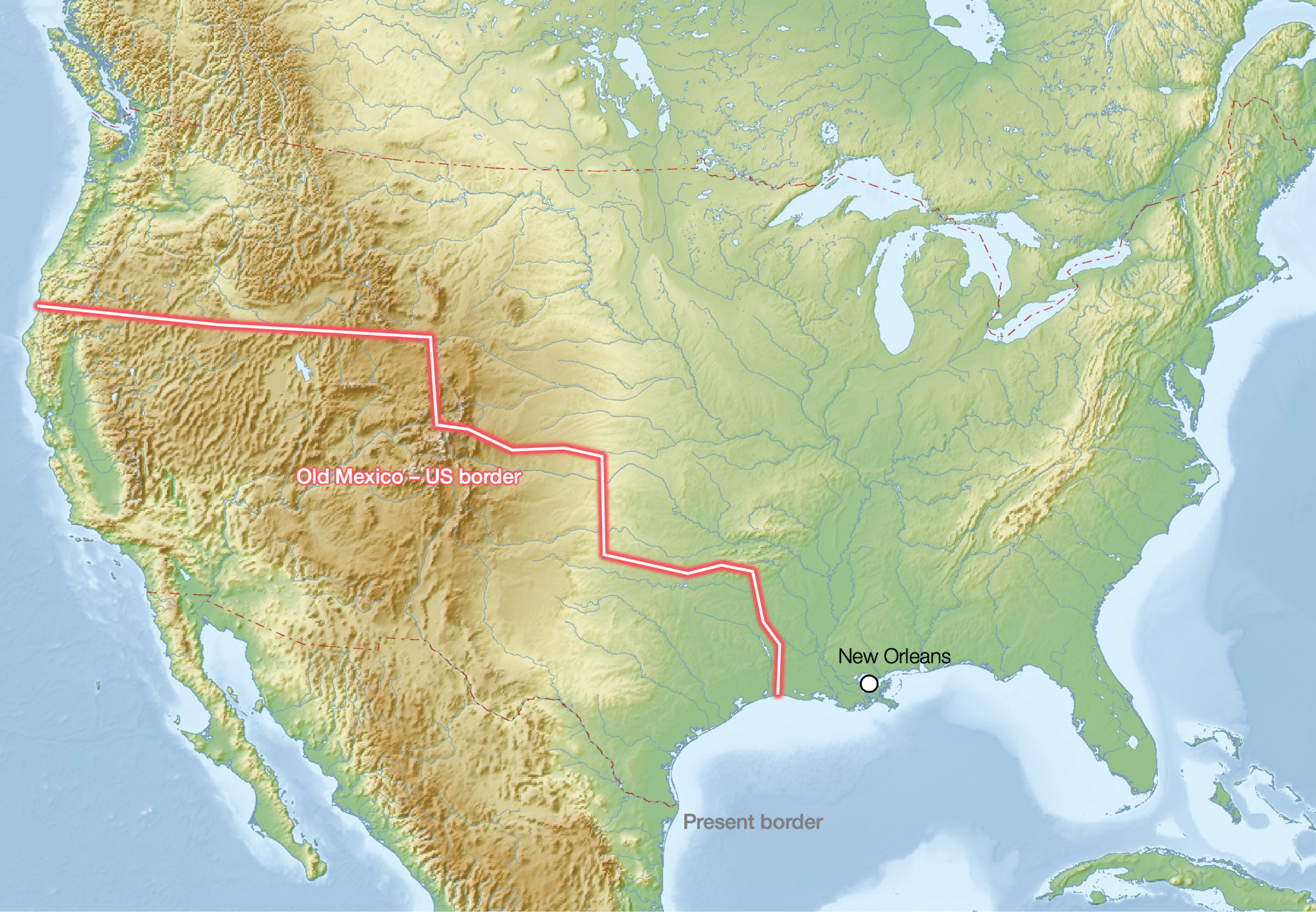
What is now Mexico lacks even a single navigable river of any size. Its agricultural zones are disconnected and it boasts few good natural ports. Mexico’s north is too dry while its south is too wet, and both are too mountainous to support major population centers or robust agricultural activities. Additionally, the terrain is just rugged making transportation expensive.
Conclusion
To summarize what America possesses:
Some of the best fertile cropland.
Naturally navigable waterways.
Naturally protected ports.
Huge oil and gas resources for energy.
Geographical defenses against invaders.
When the world sees China climbing rapidly and America tripping itself with silly policies, it becomes easy to forget that America’s geography plays a big role in ensuring that it will always be a wealthy nation imbued with natural gifts.