
Net-net Situation
Sung Jin Machinery (SJM) is a Korean company. This investment is a net-net situation, the operating business faces secular headwinds, but it’s cashflow profitable plus lots of value on its balance sheet.
Current market cap is ₩52.2b.
Taking the assets:
Cash ₩75b
Short term deposits ₩17.3b
Short term notes ₩10b
Securities FVTPL ₩6.4b (apply 50% discount ₩3.2b)
Inventories ₩68.1b (apply 50% discount ₩34b)
Less liabilities and non controlling interests:
Total liabilities ₩55.9b
Non controlling interests ₩9b
If you just consider the net of these items above, the “liquidation value” is ₩74.6b. The stock is trading at 30% lower.
There are further upsides:
SJM owns the land where 2 of their home country plants operate — Ansan (안산) and Siheung (시흥) (both in Gyeonggi). It sits on the balance sheet at cost basis of ₩23.3b dating back many decades, so definitely today it's worth much more. The main Korean plants are fully owned by SJM. They also have plants in China, South Africa, Mexico, Morocco, Malaysia, and it opened an Indian plant last year.
The operating business has existed for over 50 years. It has been profitable in recent years, net income was ₩10.7b last year and has averaged around this amount for the past 10 years.
Free cashflow (FCF) has averaged ~₩20bn over FY23—25, so the business trades at 2.6x trailing FCF.
SJM pays 6% dividend while you wait.
Business Description
The business economics is not good, but this is not very important in net-net situations because the price is absurdly cheap.
Now, SJM is cheap because it's a sunset business. They manufacture something called “flex pipe”. This is their main business making up 87% revenues, but only 5% margins.
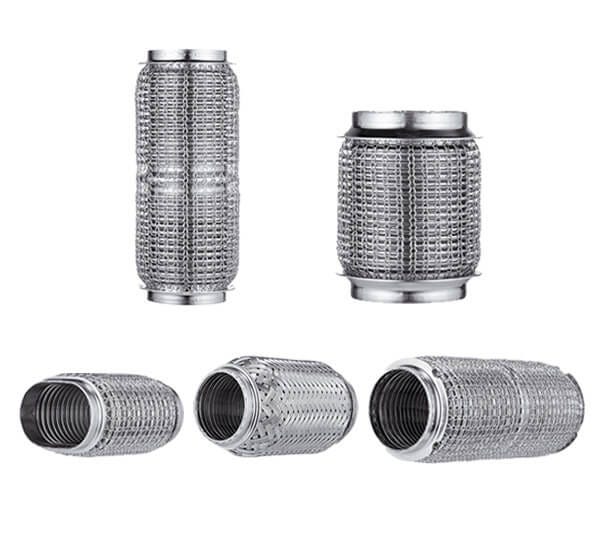
These are corrugated stainless tube wrapped in wire braid, welded between the engine and the rest of the pipe, installed at the front of a vehicle's exhaust system, close to the engine. It absorbs vibrations, reduces noise, and prevents the pipes from cracking.
SJM was the first company to make flex pipes in Korea. Now produces 16 million flex pipes annually.
The obvious secular headwind is electric vehicles (EV), which don't have an exhaust and hence don't need flex pipes. As of mid-2026, South Korea's cumulative pure EV registrations have reached 1,095,218 units, representing 4.1% of all registered vehicles in the country.
At end of last year, the cumulative number was 899k. So nearly 200k new EVs in half a year.
China is adopting EV at an even faster pace.
There is a second, smaller business making the same kind of bellows in big sizes for ships, power plants, and pipework. It is 13% revenues, but is much more profitable at 15% margins.
SJM is a family controlled business via SJM Holdings, which owns 40.6%. The Chairman is also the founder, he is 89 years old. But his son owns 51% of SJM Holdings and took over the business in 2013, so the succession is already done.
SJM Holdings also owns a steel importer, TNN, which sells SJM about half of its stainless coil (40% of SJM’s raw materials purchases). So the family takes a cut from this related party.
Unlock Value
SJM filed for the Value-Up Plan in March 2026.
For those who aren't familiar, Korea's Value-Up Plan is an initiative designed to boost the valuation of listed companies and resolve the enduring “Korea discount”. That's precisely the reason why we are looking into this pond.
However, when cheap Korean companies file for Value-Up it does not automatically mean that shareholders will definitely unlock the discount to book value, especially for family owned businesses.
In SJM case, we assume that nobody is going to liquidate this family owned company. Then there are only 2 possibilities to unlock value:
The land under their Korean plants were bought many decades ago, and are recorded at cost basis, today they are worth much more. In 2000 to 2007, low interest rates and massive liquidity led to a real estate surge driving land price growth of 4–5%. Then recently semiconductor projects began coming up causing land prices to rise again.
Focus on the higher margin business and let the flex pipes segment slowly die out.
Of course there is a risk that the family does nothing and the discount persist.
However, we are paid a 6% dividend for waiting, and buying the stock at a starting FCF yield of 38.5%. If nothing is done, the business will decline slowly, but surely will not disappear in the next few years. In other words, the margin of safety is substantial.