
HMS.PA: Hermès
Preface: Reading materials on vacation, collected learnings from the book “The Luxury Strategy” and various sources.
History
Hermes has an incredibly long history of 187 years (in 2024), we will break it down into 6 periods reflecting the different generational leadership Hermes underwent.
Generation 1: Thierry Hermès
In the very beginning, Thierry Hermès founded Hermès in 1837. Back then, Hermès was a house that created horse harnesses, wroth iron harnesses and bridles for noblemen.
Hermès established a reputation for exceptional craftsmanship. This excellence was recognized with two First Class Medals at the Paris Exposition, in both 1855 and 1867.
Generation 2: Charles-Emile
Thierry Hermès passed away in 1878 and his son, Charles-Emile, took over the company. He has worked with his father for more than two decades and had relocated Hermès workshops to 24 Faubourg Saint-Honoré. This location remains the company’s headquarters today.
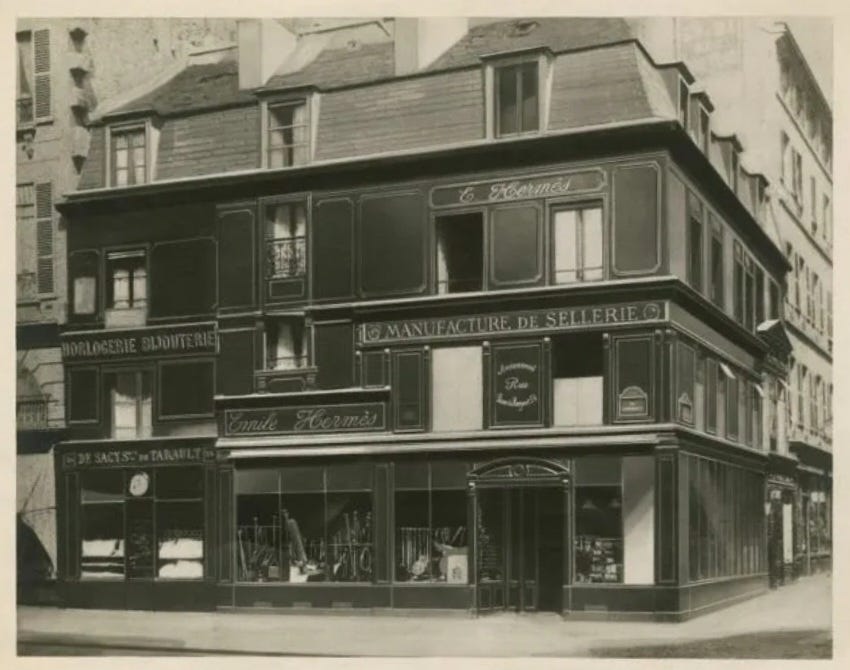
Expanding on his father’s harness-making business, Charles-Emile incorporated saddle-making into Hermès’ product line. Horseback riding was then considered a higher social status than carriage travel, making saddles a desirable product.
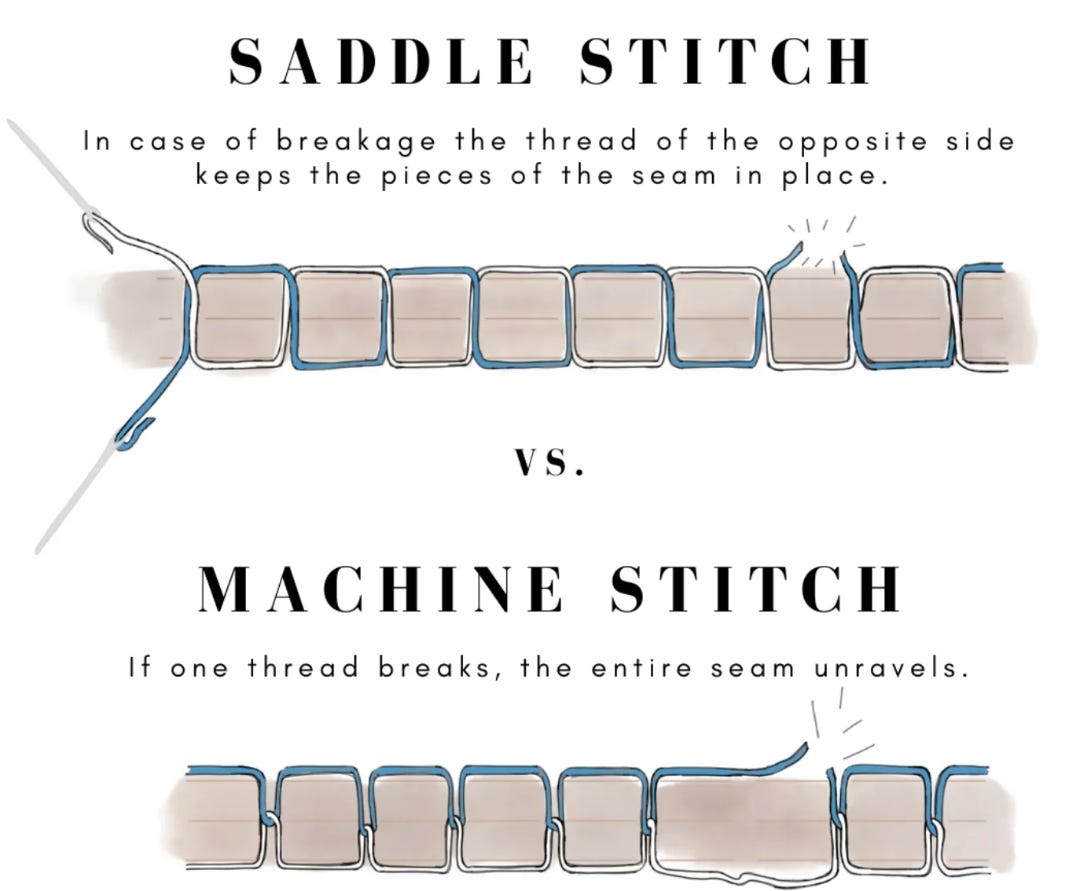
This also marked the beginning of Hermès’ iconic saddle stitch, a hand-stitched technique renowned for its durability. Unlike machine stitching, a saddle stitch remains intact even if one thread breaks.
Generation 3: Emile-Maurice
In 1902, Charles-Emile retires and passes the business to his sons, Adolphe and Emile-Maurice.
The brothers renamed the company Hermès Freres, which meant Hermès Brothers.
Emile-Maurice, the more entrepreneurial of the two brothers, proved instrumental in elevating Hermès’ status. His business acumen led to securing the Tsar of Russia as a client, solidifying Hermès’ reputation among global elites.
Conversely, Adolphe was apprehensive about the company’s future due to the increasing popularity of automobiles, which threatened to replace horse-drawn carriages.
Adolphe’s doubts about Hermès future led him to leave the company in 1919 while his brother Emile-Maurice bought him out.
The business in the equestrian market was declining due to the birth of automobiles.
What Emile-Maurice did so critically was to push Hermès to produce out of the equestrian market, diversifying into travel and sport-related leather goods, ready-to-wear clothing, watches and gloves.
The very first bag Hermès made was called the Haut à Courroies (HAC). It was made to carry stuff for horse riders, like their boots and saddles. Later, people started using it to carry things in their cars.
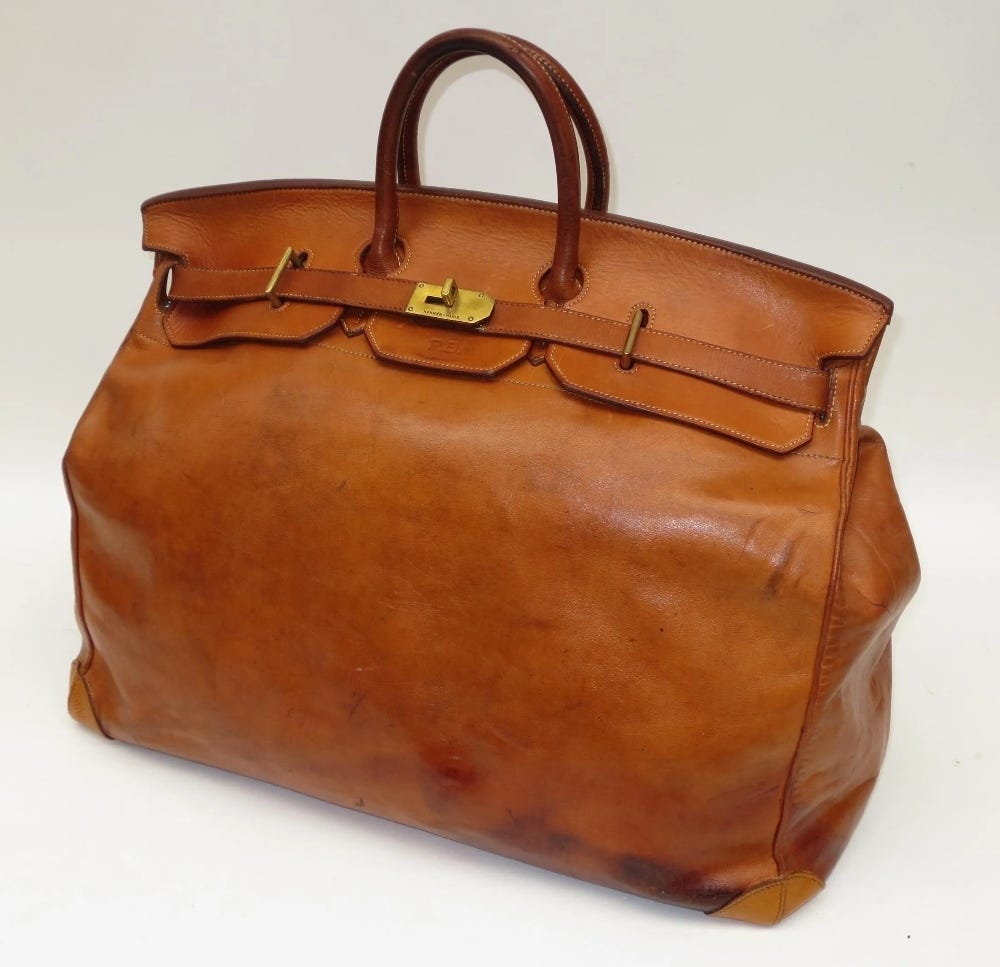
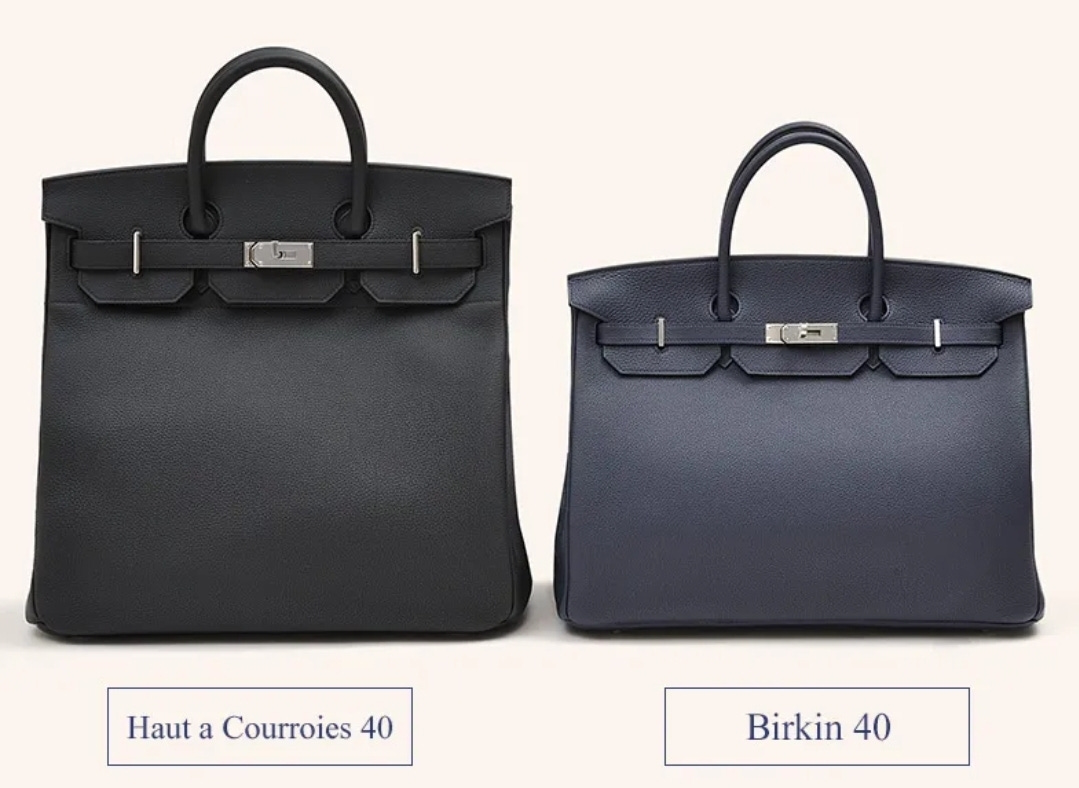
The importance of HAC was that it gave rise to the design of the more familiar Birkin bag decades later:
In 1916, Emile Maurice was sent to the USA as a French officer during World War 1 to learn about American military production.
During the trip, he saw how the American cars used a zipper for their roofs, which allowed for quick opening and closing.
This gave him an inspiration to use zippers on jackets and bags. Immediately, he secured an exclusive right to use the zipper invention in France for 2 years.
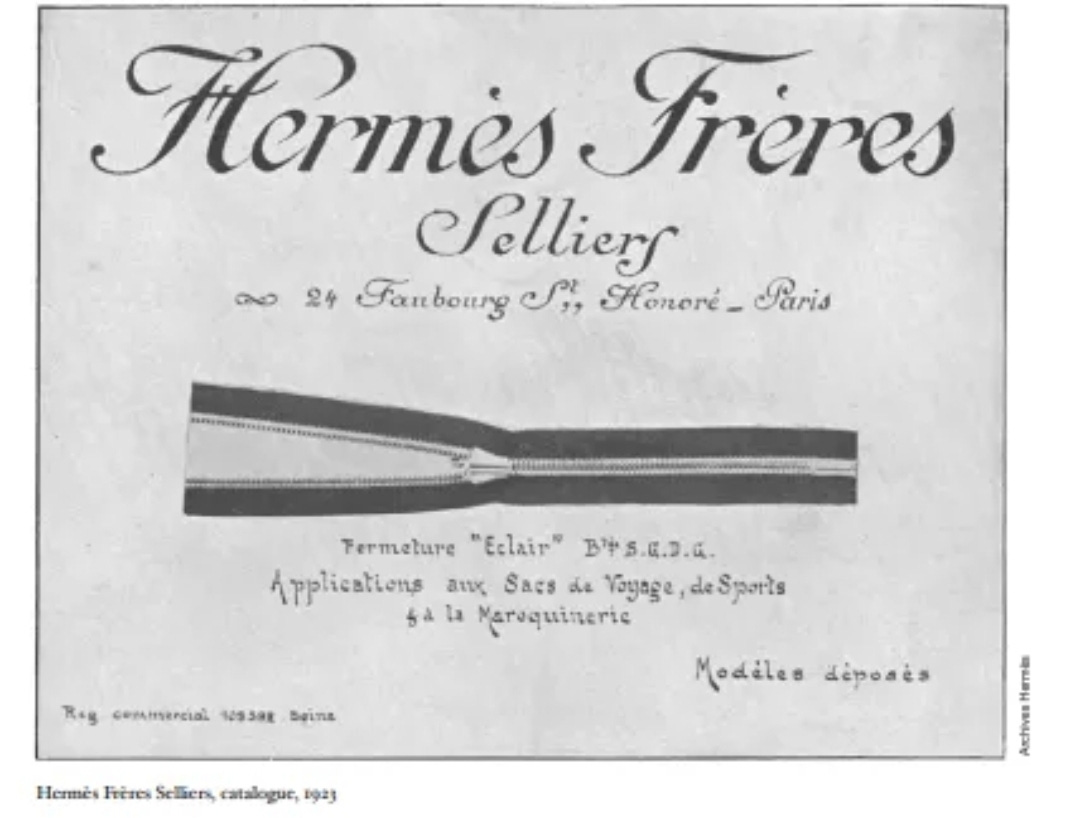
Emile-Maurice’s foresight allowed Hermès to be the first in France to use the zipper.
Eventually, Hermès made the first-ever golf leather jacket for the Duke of Windsor. The zipper was so popular that it was known as the “Hermès Fastener”.
In 1923, Hermes launched the le sac pour l’auto, now known as the Bolide Bag. It was the first handbag that came with a zipper closure. The word “Bolide” means comet, and it was inspired by a nickname for sports cars.
Instead of resisting the change brought by the automobile, Emile-Maurice embraced change and led Hermès to satisfy the surge in demand for travel accessories such as driving gloves, racing scarves, vehicle luggage trunks.
From 1925 to 1928, Hermes started to branch out beyond leather goods. They started to introduce jewellery, watches and sandals.
Interestingly, Emile-Maurice only had 4 daughters with no sons to pass the business to the next generation.
He decided to pass the business on to his son-in-law, Robert Dumas Hermès, who became the head of the company in 1951.
Generation 4: Robert Dumas
Building on the foundation laid by his predecessor, Robert Dumas expanded Hermès’ non-equestrian business into a global luxury empire. His leadership brought a new sense of playfulness and creativity to the brand’s designs.
Kelly Bag
In 1928, Robert Dumas took inspiration from the HAC bag to create the Sac a Depeches bag, now known as the Kelly bag.
Named the “Sac à Dépêches”, which meant “dispatch bag”, he wanted to design a smaller bag that could be used to store important documents.
The Sac à Dépêches did not rise to fame immediately; only in the 1950s did it catch the public’s attention through Grace Kelly.
Grace Kelly, a Hollywood icon, was already a fashion sensation when she starred in the 1955 film “To Catch a Thief.”
In the movie, she carried a Hermès Sac à Dépêches bag, which quickly became her personal favourite. Rumour has it that she refused to return the bag even after the filming ended.
A year later in 1956, Grace Kelly married Prince Rainer III of Monaco. This sparked a media frenzy as her fairytale-like story of a small-town American beauty marrying a handsome European prince further heightened her fame.
Within months of her marriage, she was expecting a baby. Not ready to announce her pregnancy to the world, she used the Sac à Dépêches bag to hide her tummy from the paparazzi.
A picture of her with the bag was featured on the cover of Life Magazine, prompting women all over the world to rush to their local Hermès boutique asking for the “Kelly Bag”.
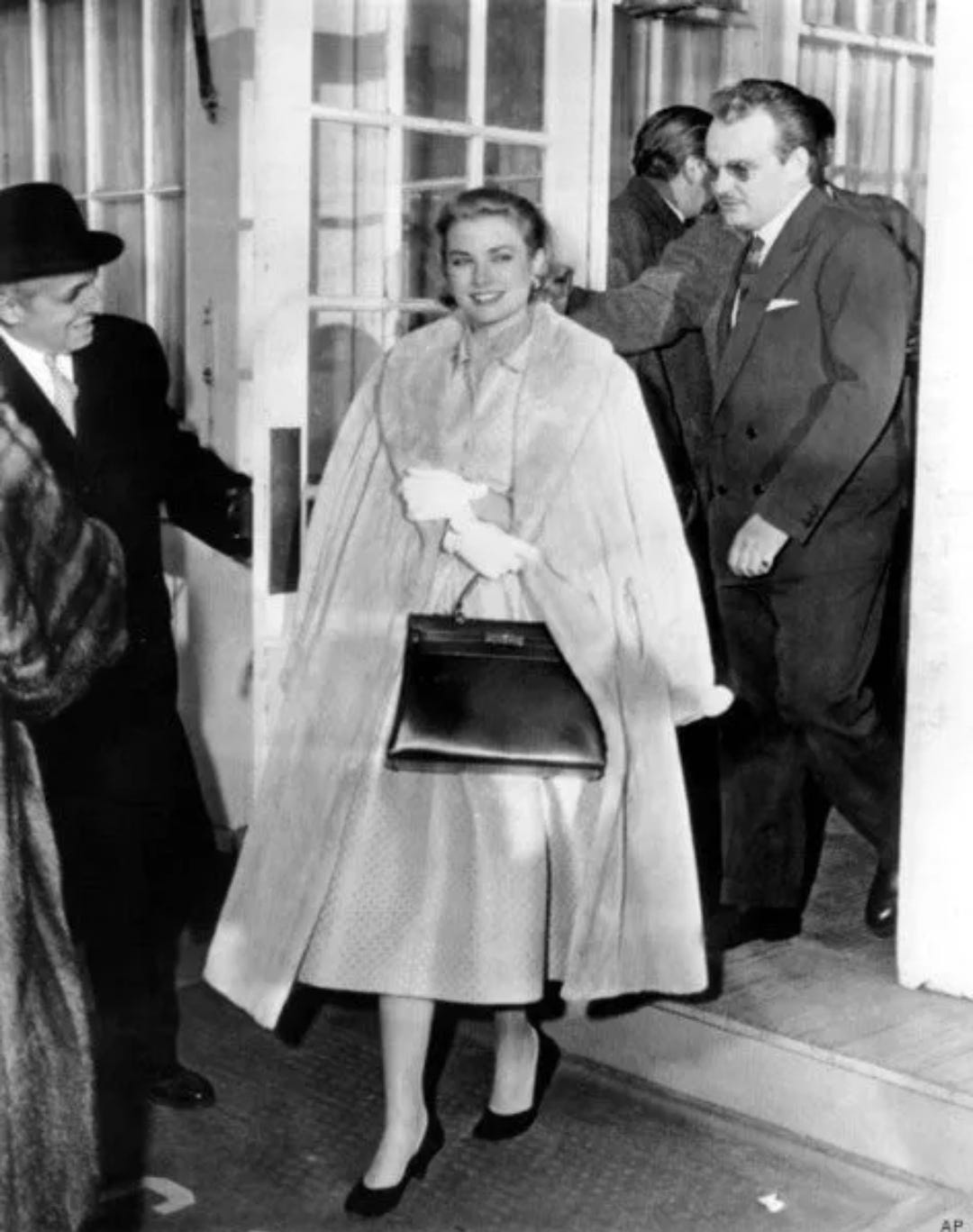
Sales of the bag shot through the roof, solidifying its status as a timeless fashion accessory.
Seeing how many of its customers called it the “Kelly Bag”, Hermès finally yielded and changed the name to the “Kelly Bag” in 1977.
Till today, the Kelly Bag remains popular and it is all attributed to the works of Robert Dumas, who created it in the 1920s.
Throughout its history, Hermès has often named its products after iconic celebrities or objects. This practice has become a common tradition for the brand. We will see this again with the Birkin bag.
Scarf
The Hermès scarf is one of the most successful product lines that Robert Dumas introduced. Over time, it has been highly sought after and worn by celebrities and royals, making it a timeless fashion accessory.
In 1937, for its 100th anniversary, Hermès made its first scarf “des omnibus et dames blanches”.
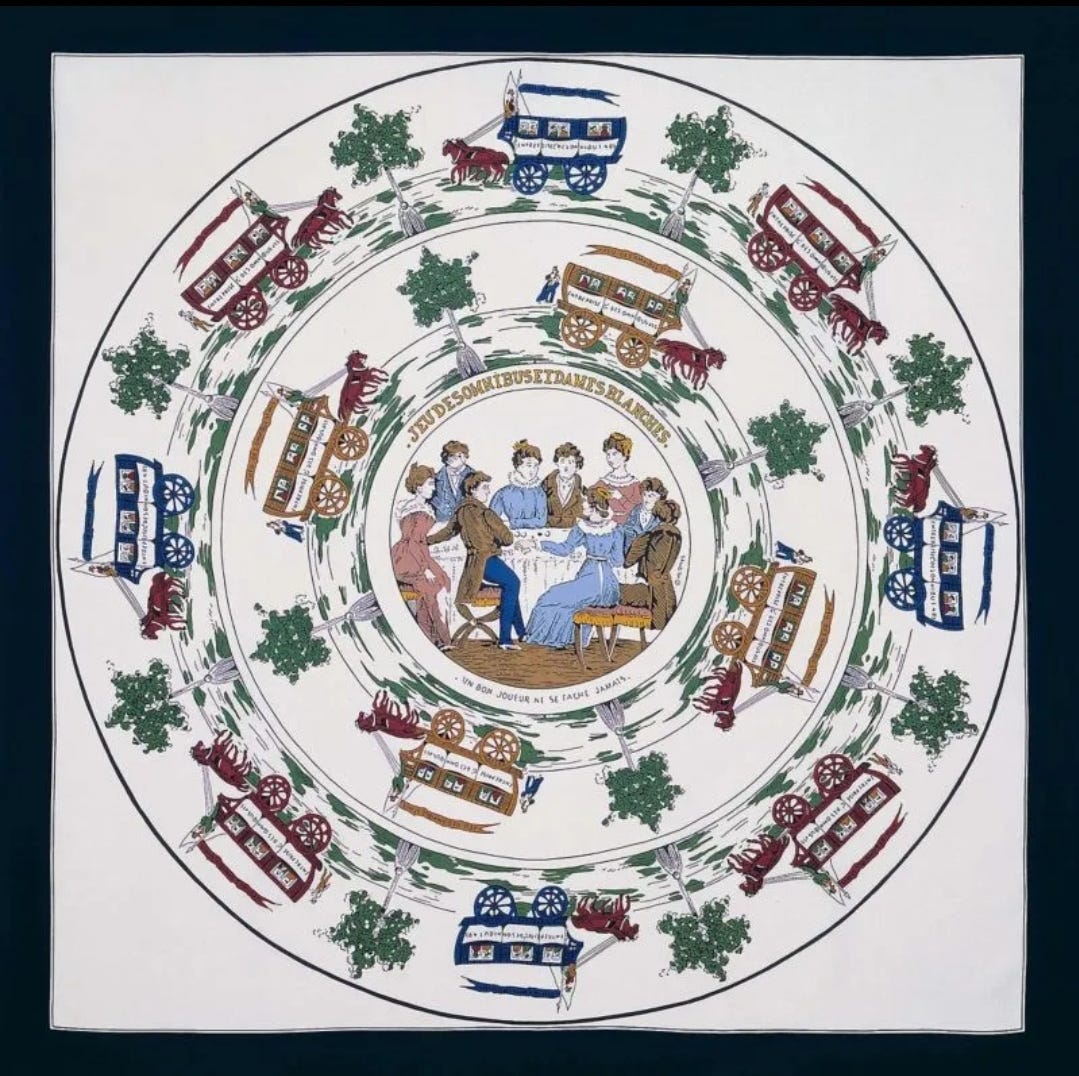
It was designed by Robert Dumas and the print was inspired by a board game featuring players in the centre surrounded by horse-drawn carriages of two competing Parisian horse-carriage companies called “Omnibus” and “Dames Blanches”.
The scarf was made of Chinese silk which was twice as strong as other silks in the market at the time. The scarf became a hit and Hermès became a prominent player in the scarf industry.
Queen Elizabeth II’s choice to wear Hermès scarves has influenced many women to follow suit. This popularity has contributed significantly to Hermès’ revenue, with scarves accounting for nearly 50% of the brand’s sales back then.
Apart from being used as a head scarf, it was also used innovatively by Grace Kelly, when she used it as a sling for her broken arm:
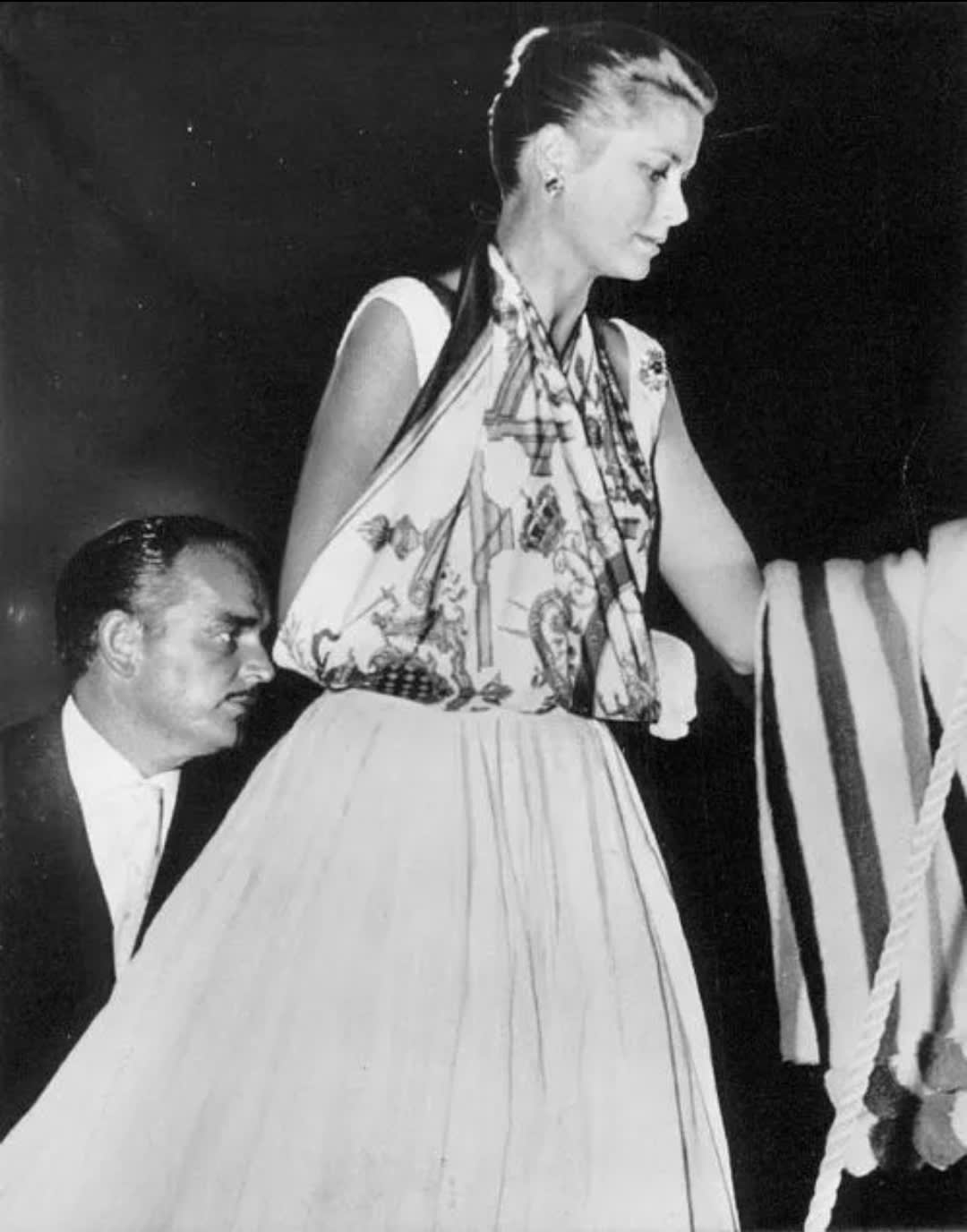
With a lower price point compared to its bags, it made Hermès products more accessible to consumers without compromising on quality.
A 90cm x 90cm Hermes scarf will cost around $800 – $1,000. To the untrained eye, it can seem like an exorbitant price to pay for a piece of a 90cm square fabric.
Hermès scarves are highly priced due to the meticulous craftsmanship involved in their production. The brand maintains the traditional hand-printing method, refusing to compromise on quality by using machines. This dedication to artisanal techniques sets Hermès apart from competitors who have abandoned this labour-intensive process.
Over time, they have educated their consumers that with the same amount of money they spend at Hermès, they cannot get the same quality anywhere else.
The silk used to make Hermès scarves is harvested from the cocoons of silkworms. They come from Brazil as Chinese silk manufacturers were unable to achieve Grade A6 (the highest grade) silk.
Each silkworm devours 15kg of mulberry leaves in 3 weeks and when satiated, it begins to spin its cocoon. Each cocoon only produces a single 1,500m strand of silk. To create a 90cm x 90cm scarf, it requires 450,000m of raw silk. This means 300 cocoons and 4,500kg of mulberry leaves are required to make just one scarf.
It takes about 2 years for a Hermès silk scarf to go from design sketches to printing. The colouring process is extremely tedious, requiring an artisan to apply colours layer by layer. If a design has thirty colours, it can take up to 600 hours to complete the engraving process.
In 2023, the silk and textile segment recorded €932m of revenues. That’s literally turning silk into gold.
Robert Dumas’s efforts in launching the Hermès scarf back in 1937 continue to pay off dividends today, and it was one of the highlights of his career.
Logo
Hermès choice of its iconic orange was born out of practicality and necessity. During World War 2, their original cream-coloured box became unavailable due to the shortage of dyes. The only colour the supplier could provide was bold orange.
In the 1950s, Robert Dumas created the Hermès logo that they still use today. He was inspired by the painting “Le Duc Attelé, Groom à l’Attente” (Hitched Carraige, Waiting Groom).
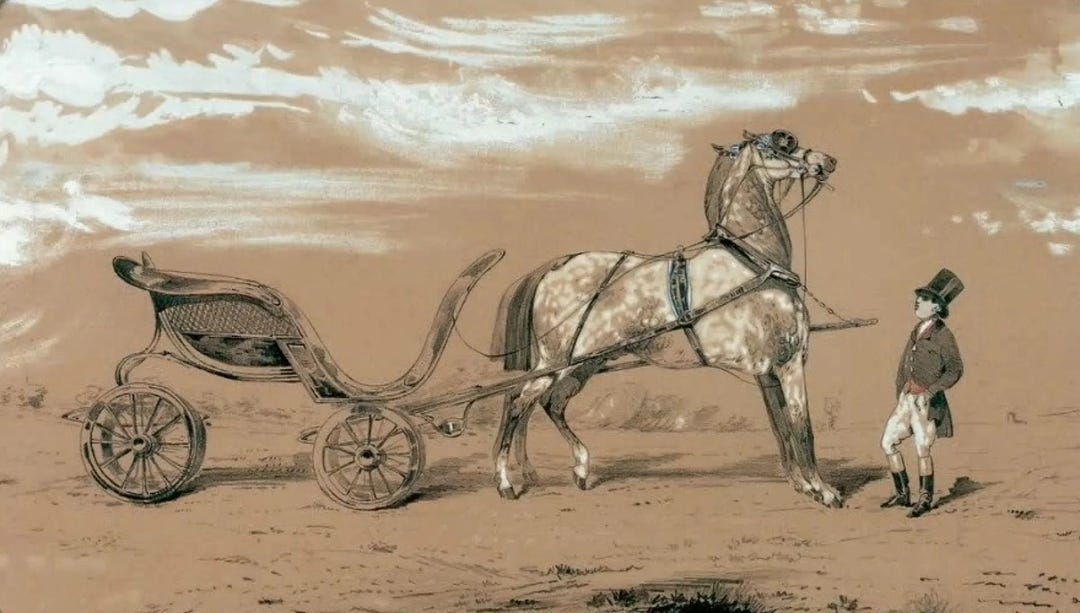
The new carriage logo firmly connects the brand to its humble beginnings as a workshop producing horse harnesses and equipment.
Generation 5: Jean-Louis Dumas
In 1978, Jean-Louis Dumas took over his father, Robert Dumas. During his time, Hermès had difficulty staying popular in the changing world of luxury. However, Jean-Louis unique life experiences were instrumental in helping Hermès.
He had lived in America and worked at a big store called Bloomingdale’s. This helped him understand the consumer behaviour of Americans, and he was able to take lessons from how other luxury companies ran their business.
Instead of making radical changes, he made changes that wouldn’t compromise Hermès heritage and core values.
What happened next shocked many within the company and the luxury world. He started campaigns featuring young women wearing Hermès scarves with jeans; something unprecedented in the luxury world.
Birkin Bag
In the early 1980s, on a routine flight from Paris to London, a chance encounter between Jean-Louis and famous actress Jane Birkin led to one of the most coveted handbags in history.
Jane Birkin was known for carrying her signature straw basket to hold her items. As she tried to store her basket in the overhead compartment, all the contents fell out in front of Jean-Louis.
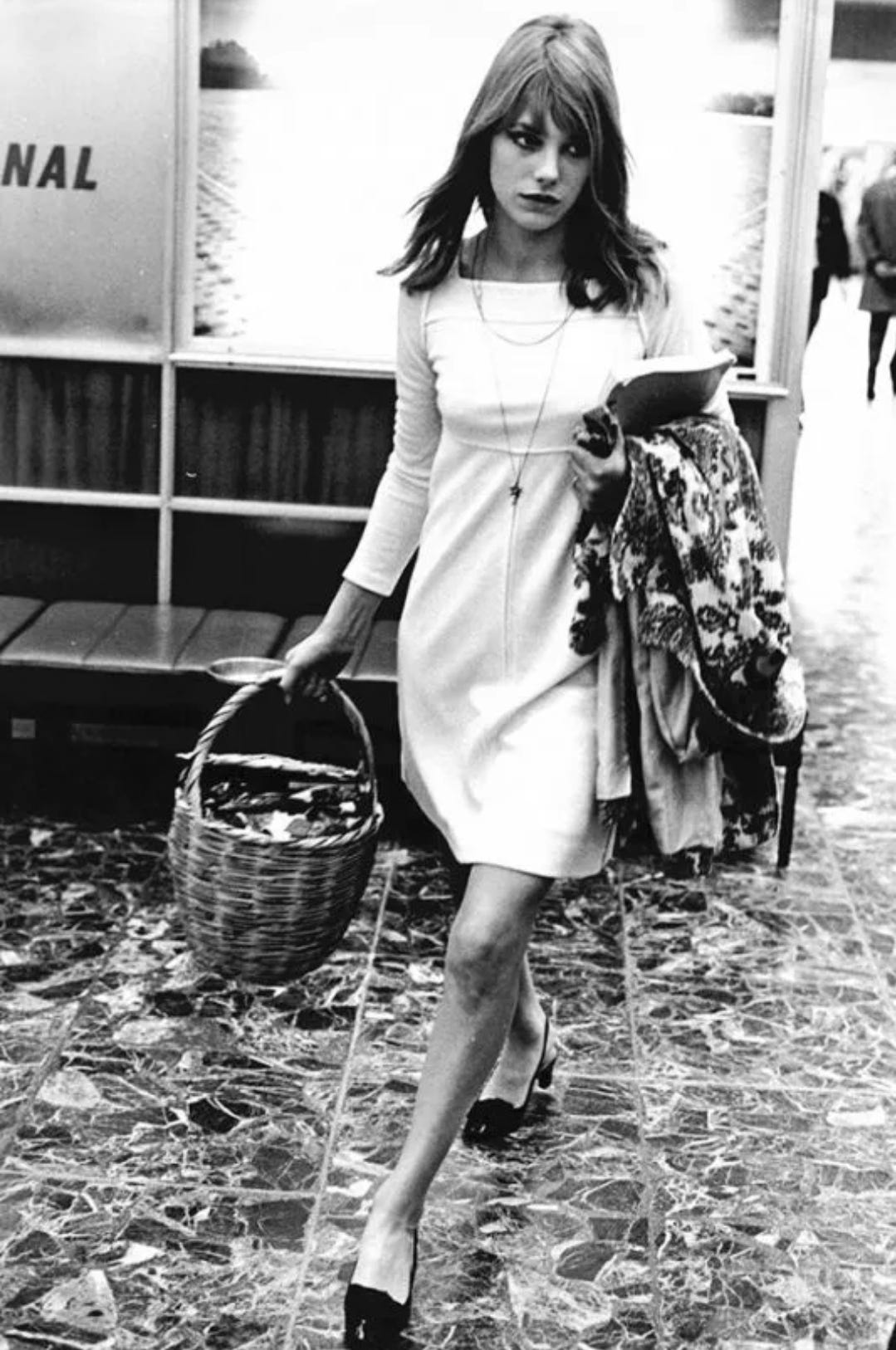
He immediately helped to pick up her items and joked that she needed a handbag with pockets.
Jane Birkin expressed her frustration with the lack of large everyday bags in the market that could hold all the items a busy mother carried.
Jean-Louis immediately saw an opportunity. Using the air sickness bag, he began to sketch a design for a spacious, rectangular bag with two handles and a secure flap, inspired by Birkin’s desire for a practical yet elegant companion for her travels.
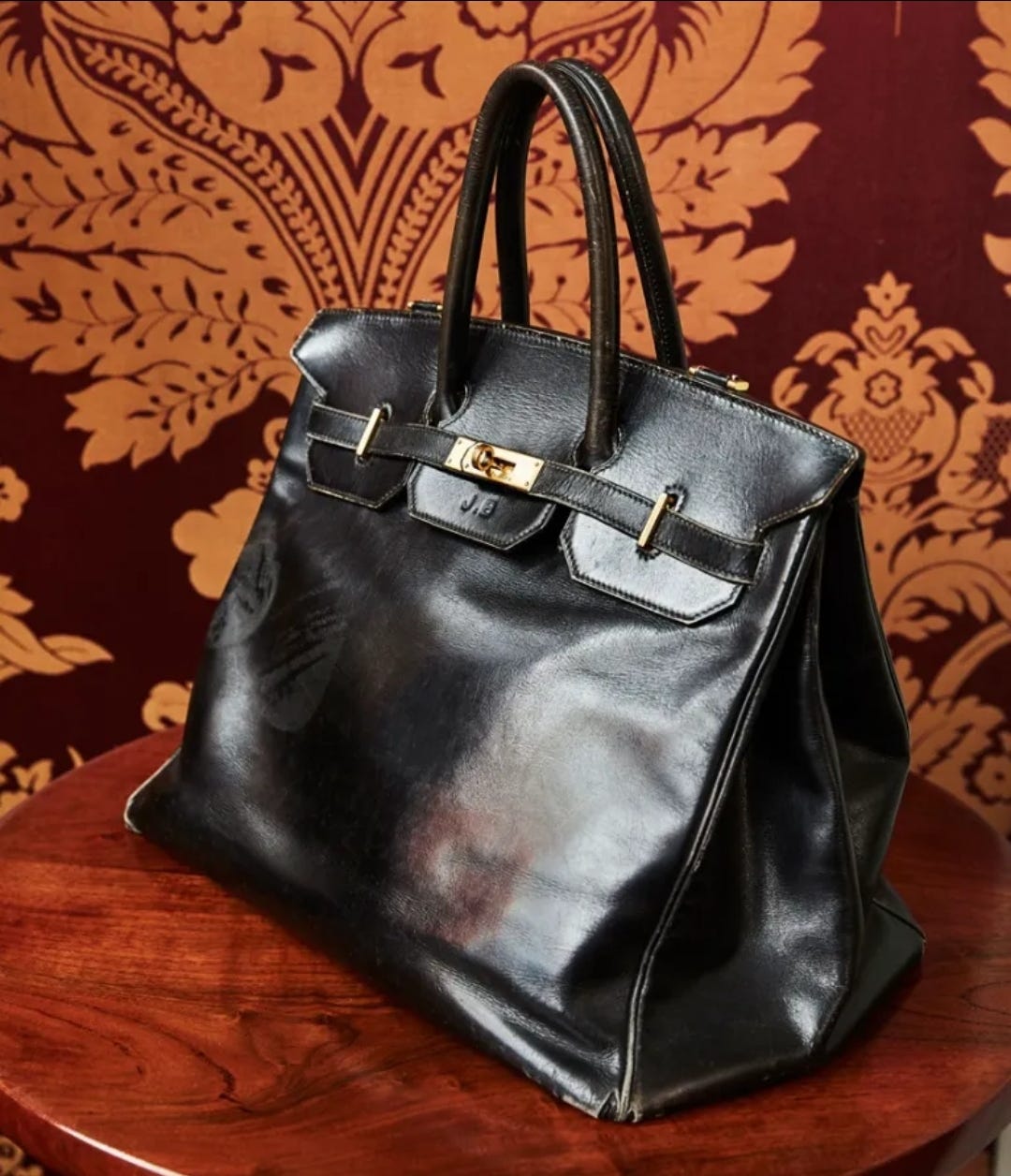
Eventually, the bag quickly gained popularity, becoming a symbol of status and sophistication. Many people are willing to pay a premium for a Birkin because of Hermès reputation for exceptional quality and durability. These bags are designed to last a lifetime and are considered valuable investments.
The craftsmanship behind each Birkin bag is nothing short of perfection. Behind every bag lies a team of highly skilled artisans. They undergo a mandatory 2-year training before they are even allowed to create any product.
Unlike mass-produced handbags, each Birkin bag is meticulously stitched and assembled by hand from start to finish. This approach allows a level of individuality and quality that machines cannot replicate. It usually takes 18-25 hours to create a single bag and a craftsman only makes 2-3 bags a week.
Similar to creating silks, Hermès only uses the best leathers. The Birkin is crafted with leathers like Togo, Clemence and Epsom which are known for durability and scratch-resistant qualities.
To ensure that their customer’s bags can last a lifetime, Hermès operates repair workshops and in 2023, they have repaired 202,000 products.
Initial Public Offering
In 1993, Jean-Louis made Hermès a public company by selling its shares on the Paris Stock Exchange. The listing was so popular that it was oversubscribed by 34x.
He told Forbes magazine that this would help lessen family tensions by allowing some members to liquidate their holdings without “squabbling over share valuations among themselves.”
Despite becoming a public company, the Hermès family still owned 80% of the company then, leaving high skin in the game. Even in 2024, the family still owns 54% of the company.
Improved Distribution
Another strategic move Jean-Louis made was to buy back franchisees and expand the total number of company-owned stores. This allows the family to have greater control over its stores and customer experience.
Hermès also launched their online store for US customers in 2001. This was years before most traditional retailers adopted online shopping.
Under the helm of Jean-Louis Dumas from 1978 to 2006, Hermès revenues grew from €50m to €1,510m.
Generation 6: Axel Dumas
In 2006, Jean-Louis Dumas passed the reins of Hermes to his son, Pierre-Alexis Dumas, who had been appointed Artistic Director in 2005.
To ensure a smooth transition, Jean-Louis appointed Patrick Thomas as interim CEO until Axel Dumas, his cousin and the sixth-generation heir, was ready to take on the role.
This marked a significant change for Hermès, as it was the first time the Artistic Director and CEO roles were separated. It was also the first time a non-family member held the role of CEO.
Previously, the 1st to 5th generations of leaders held the role of Artistic Director and CEO. But Jean-Louis felt the need for specialization and separated these 2 roles.
LVMH Bernard Arnault attempts Takeover
In 2010, Bernard Arnault, CEO of LVMH, had secretly acquired a significant stake in Hermès.
Arnault had been patiently building his position since 2001, using financial instruments to acquire shares without triggering legal disclosures. By the time Hermès discovered his move, LVMH had 17.1% stake in the company.
The Hermès family was outraged by Arnault’s attempt to take over their company and Patrick Thomas, the CEO, famously insulted Arnault’s actions by saying:
If you want to seduce a beautiful woman, you don’t start by raping her from behind!
To protect their independence, the Hermès family created a holding company called H51 in 2011. This entity involved 52 Hermes family members who controlled 50.2% of Hermès shares.
Family members in the H51 group pledged to lock their shares for 20 years and give the H51 company the right of first refusal if any participating family member wanted to sell their shares. This made a hostile takeover virtually impossible.
The conflict ended in 2014 when a French court ordered LVMH to distribute most of its Hermès shares to its shareholders. While Arnault profited handsomely from the investment, Hermès emerged victorious, preserving its independence and solidifying family control.
Transition to current CEO Axel Dumas
Axel Dumas, nephew of Jean-Louis Dumas, took the position as Executive Chairman in 2013.
Axel recognized the importance of digital experiences for customers. He redesigned the company’s website (hermes.com) in 2017 and carefully navigated the digital world by limiting which products were available online. For example, the highly sought-after Birkin or Kelly bags cannot be bought online.
One of the biggest moves that Axel made was to partner with Apple to create the Apple Hermès watch.
For Hermès, this partnership was a long-term investment. By offering affordable Hermès products through the Apple Watch, they could attract new customers who might eventually upgrade to more expensive Hermès items when they progress in life.
To some, this seems to be a mistake. The Apple Hermès watch strap band costs around $500. While this may seem expensive when compared with other Apple products, this is probably the cheapest leather product that Hermès is selling. A simple luggage tag is $640, a polo shirt would cost $1,200 and a leather Rodeo bag charm is $1,100.
The concern was that associating with a lower-priced product might dilute Hermès brand value of prioritizing exclusivity.
For example, there was this story that Hermès deliberately discontinued the Canvas Beach bag in Japan because it sold too quickly. They not only stopped selling the product but also took all their supply and destroyed it. When the management announced this, it was met with a standing ovation from the family.
It is premature to conclude whether this collaboration was a brilliant move or a mistake. While there have been rumours of a potential end to the collaboration, as of 2024, Hermès website continues to feature the Apple Hermès Watch.
Quality Control
Axel shared a story which reflects how Hermès thinks about long term value:
When I was head of the leather department, there was a spike in the gold price in 2008 because of the uncertainty in the financial markets.
We use much more gold in the closings of our bags than anyone else and that has a cost. So the finance person said, “do you need to put so much?”
And I said, “OK, let’s discuss” and I called in one of our best craftsmen and asked, “What do you think?”
He told me, “It’s very easy. If I put less gold like the others, no craftsman will see the difference. The sales associate won’t see the difference, in the window of the store, no one will see the difference and the client won’t see the difference. But in nine years, the way we do it will have such a better patina than anyone else.”
And we said, “Let’s keep doing it our way. What is going to happen in nine years is as important for us as what is going to happen in a few months.”
Gold patina is a term used to describe the natural colour changes in gold over time. Patina gives gold a distinctive, aged look that is prized in antique and vintage jewellery.
Hermès dedication to excellent craftsmanship is crucial. When consumers trust the quality of their bags, they see them as investments rather than depreciating assets.
This shift in mindset encourages customers to view a Hermes bag as a valuable purchase rather than a frivolous expense.
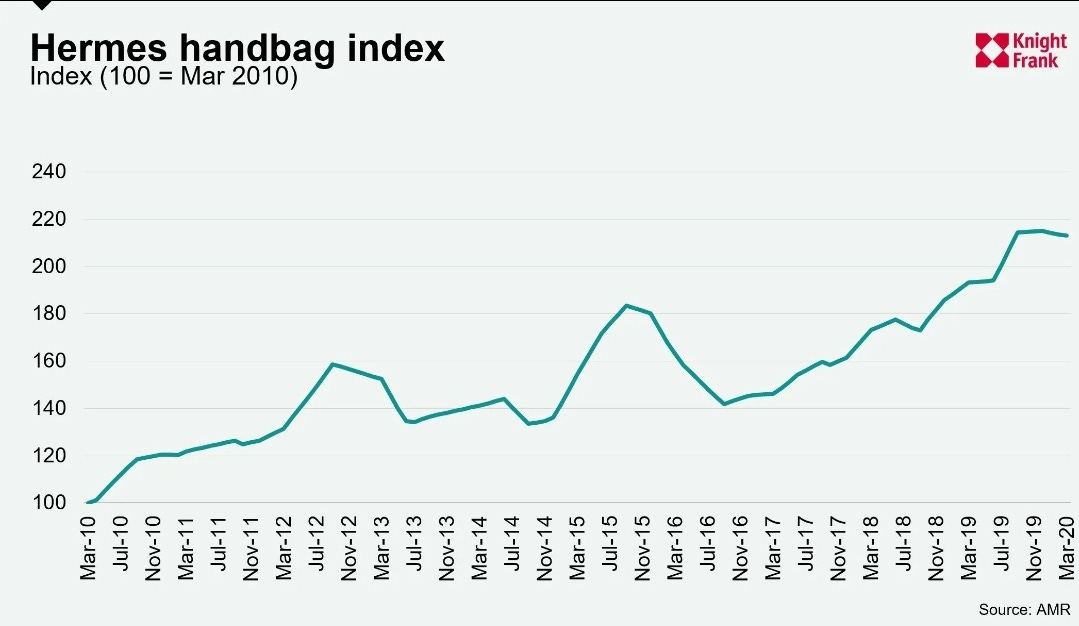
The above chart shows that a basket of Hermès bags grew 2x in price over 10 years.
Another testament to the perceived quality is that the after-market prices are 2 to 3 times retail prices.
This is why Hermès is selective to who they sell their handbags, ensuring that customers are genuine enthusiasts rather than resellers. This exclusivity contributes to the high demand for their iconic Birkin and Kelly bags, often resulting in waiting lists of over 1 year.
Difficulties of the Luxury Business
Managing a luxury business is a challenging task. There are 2 main problems to solve:
The tension between scarcity (restricting access, creating desire) and diffusion (growth and sales).
The tension between timelessness, heritage, and innovation.
For luxury brands, the perceived diffusion kills the dream through the loss of exclusivity, and loss of desire from other people. It is necessary to reduce diffusion, and increase the obstacles to accessing the brand.
Scarcity needs to be created, which is done through both physical scarcity (premium pricing, restrictions to access), or virtual scarcity (through other psychological means such as marketing).
Probably by far the most important element of establishing exclusivity is premium pricing, making the products out of reach of majority of the people. However, this only works if a brand has strong desirability and brand equity. The stronger one desires for something, the less relevant price becomes. Contrast to a commodity, where the producer is a price-taker.
Brands that can maintain high value perception over time have a license to raise prices, and this can earn high returns on invested capital. This relationship between brand equity and pricing power is at the very heart of luxury brand management. Jean-Jacques, CFO of LVMH, addressed this point:
It seems like pricing power is a sort of windfall. And some brands have it and some brands have not. The reality is that pricing power is actually a function of the desirability of the brand. Desirable brands can increase prices and non-desirable brands cannot. It’s as simple as that. So what it is about is really developing strategies, marketing, products, distribution strategies that will increase desirability of the brand, so that in tough times or in other times, we can reflect into prices the cost of doing business. It’s as simple as that.
Raw Materials
Hermès owns several French tanneries and has strong partnerships with others. This grants the company complete control over its materials, developing exclusive textures, colors, and finishes, while having access to pristine, hand-picked leathers to ensure there is never any compromise in craftsmanship.
Even within its own tanneries, Hermès demands only the finest skins, selling the remaining lower-quality pieces to other brands. The company uses only full-grain leather, preserving the natural grain without sanding or concealing. In contrast, other brands rely on stamped and coated leathers for mass production, applying wax or plastic finishes to mask imperfections in lower-quality hides.
Hermès pays cattle farmers for specific vaccinations against skin diseases and promotes practices fostering healthier animals.
This rigorous approach to sourcing extends beyond leather. Even the hardware used in Hermès products is meticulously crafted in French metallurgy shops. The brand’s unwavering commitment to maintaining a high level of quality and supervision throughout its supply chain reinforces its reputation as a paragon of luxury craftsmanship.
Products Distribution
Controlled distribution is of paramount importance. Hermès implements an own store network and strictly no wholesale. Stores are always in prime locations, and many are architecturally designed, almost like galleries, making a bold statement that is visible to all. The fixed costs of setting up and running own brand stores like this are extremely high, which is why only mega-brands can afford to do this, creating a barrier to entry for smaller brands. In turn, the gross margins are much higher due to the elimination of intermediaries.
The high margins Hermès enjoys are not all due to pricing power, but also cost savings from the lack of intermediaries. This competitive advantage is structural and very defensible.
Brand Positioning
At the heart of every traditional consumer product is a brand positioning matrix, which tries to articulate the unique value proposition or advantage that one brand has over another.
This does not apply to the economics of luxury.
Luxury is superlative, not comparative.
The beauty of luxury is that no one can definitively say whether a Louis Vuitton bag is better than a Hermès bag because that concept doesn’t even make sense.
Each luxury brand is its own universe with its own identity, making them difficult to compare except in very vague terms. For example, LV brand identity can be tied to travel and a global lifestyle due to its origins as a producer of high-end leather luggage trunks. Hermès identity in premium leather goods is tied to its origins as a producer of high-end horse saddles.
A consumer’s preference for one or the other is largely a matter of personal tastes. Consequently, proximity of luxury stores next to each other on high-end streets is not a problem. In fact, they only strengthen each other from an image and social codes point of view.
Marketing
Luxury brand marketing is often about trying to depict a certain universe or desire around a lifestyle, but never a promise.
The essential vectors are events that are simultaneously exclusive and incomparable, intensely translating the brand’s values, and to which only a minority are invited.
Hermès sponsors the Grand Prix de Diane, a horse race, not any specific horse. The events that are sponsored must be coherent with the universe of the brand’s core, its roots.
Pricing
Over the past decade Hermès had 14% revenue CAGR, and it is known that it increases production by 7%, which means price hikes make up the remaining 7%.
Hermès pricing calculations are grounded in input costs and targeted profit margins, with no adjustments made for tactical or marketing considerations, unlike other brands that benchmark prices against competitors.
For instance, the Hermès Birkin 25, starting at approximately $8,700 in Epsom calfskin, offers a multitude of customization options allowing prices to soar further, with ostrich or lizard skins roughly doubling the cost.
A mini Kelly in crocodile currently commands about $29,000, with Hermès once fashioning a limited-edition high-jewelry diamond embedded Kelly bag sculpted from rose gold reportedly sold for a staggering $2 million.
Hermès entertains no price ceiling for haute-couture style orders, be it custom bags or upholstery for automobiles, aircraft, and even canoes, produced at a dedicated workshop near Paris.
Nevertheless, this deliberate positioning of its bags as a cut above the rest has unintentionally bolstered the brand’s desirability for decades. For luxury consumers accustomed to other brands seeking to elevate their conspicuous consumption, there’s often only one clear choice: Hermès.
Although recent price hikes across the luxury sector have somewhat narrowed the gap between Chanel and Hermès, the brand’s flagship styles remain substantially pricier than those of any other mega-brand.
Within Hermès own pricing framework, the premium positioning of its leather goods is complemented by sales of lower-priced silk scarves and neckties. The pricing discrepancy between the two categories preserves the brand’s core allure. This strategy shields Hermès exclusivity from dilution and maintains its identity.
While many can indulge in a $250 Hermès necktie or a $100 perfume, bags remain a realm reserved for the fortunate few. This reinforces the enduring link between pricing and quality at the heart of Hermès unique branding strategy.
Not Using Celebrities
Using stars to promote luxury products is extremely dangerous. A luxury brand is courted by the stars, in the same way as those stars are courted by journalists and paparazzi. The luxury brand’s must respect and dominate its customers.
Calling on the services of a star is tantamount to saying that the brand needs some of this star’s status just to survive, and admitting that it has none of its own. For the luxury brand, this is a gross error of strategy, for it turns the relationship on its head.
Hermès does not look at celebrity endorsements as a brand-building tactic and has actively stayed away from this form of marketing (a practice that is quite common in the LVMH brands). The very fact that only high tiered celebrities and the ultra-wealthy can afford and get access to their most premium and exclusive products is an authentic endorsement of the brand.
Hermès also does not follow strategies of launching region-specific collections or product offers, allowing the same product collections to be sold everywhere in the world. Additionally, Hermès has always been a significant proponent and user of the “limited edition” strategy and also limits distribution of its products in its stores, demonstrating its commitment to showcasing only the most authentic products. Hermès products are also never offered on discounts.
Expanding into China
Like any other luxury player, Hermès takes the opportunity that China presents very seriously. But, unlike others, it has adopted a very patient approach towards targeting the luxury market in China.
Although it entered China in 1997 and quickly grew its network to 28 stores covering 19 Chinese cities, the company has taken a carefully considered decision of not opening more than one store per year from 2015.
Hermès strategy for China is innovative but also risky. It plans to use its new stores to put forward the whole Hermès brand experience in front of the Chinese consumer. The latest flagship store that opened in Shanghai in 2014 (Hermès maison) is designed like a house, has craftsmen situated on different floors actually creating products and has a museum like feel to showcase the brand’s rich legacy. In addition to retail level experiences, the company is trying to forge a link with China’s rich tradition of craftsmanship to increase the brand’s appeal in the country. The adopted strategy is built on the principles of patience that is required for craftsmen to manufacture exquisite products, and is diametrically opposite to the fast-paced, quick gratification and shopping mall driven culture that exists in Asia.
The strategy is risky from the point of view of accessibility and exposure to the products and brands from rival fashion conglomerates (LVMH, Kering and Richemont). Also, the Chinese luxury consumer is extremely well travelled and is regularly exposed to global luxury trends. In that sense, they are used to and are one step ahead of luxury offerings in their country. To instill a sense of patience and appreciation for the aura of exclusivity and scarcity can be a challenging task for Hermès.
Family Ownership
All family members who work in Hermès have a very strong identification and pride with the brand, with a remarkable dedication to quality and giving his or her best to preserve the family heritage. Additionally, all members of the next generation are immersed in the company from a young age through organized tours to subsidiaries and suppliers.
The Hermès’ family business is run on the principle of a democratic monarchy, which means that leadership and management is closely tied to the family body with board of directors composed mostly of family members across the 3 lines (Dumas, Puech, Guerrand). To keep ownership and influence within the family, a 75% majority is also required to change the company statutes or the CEO.
Family group ownership of the business is 66.7% as at 2023.
Conservative Capital Structure
Given the predictability of Hermès revenues, we would expect the company to take on some debt to boost ROE. However, Hermès operates very conservatively with €2.2b of long-term debt (14% debt to equity).
Valuation & Risks
Obviously Hermès will be trading at a premium. The important driver for value is not the next few years of discounted cashflows, but it is the terminal value.
This terminal value is very sensitive to the discount rate, and it’s anyone’s guess what the perpetual growth rate should be.
We also need to keep in mind when computing the numbers these risks:
Management is very critical in the continued success of Hermès. Luxury economics is very sensitive to mistakes. For example, the $150 Canvas Beach bag sold in Japan.
It requires a small, talented group of designers and craftsmen. Even a small deviation against the “hand-made” promise can negatively affect the product.
It is possible to destroy the brand, but it will probably take a human life time (~60 years) of mistakes to ruin Hermès.
Limited opportunities to reinvest back into the business. This is due to the supply limit of craftsmen and to maintain perceived scarcity. Market saturation will likely slow this business down, which means if we pay too much today and the terminal value doesn’t deliver, then we end up with a bad investment.
If we do a reverse DCF to justify today’s market cap of €210b.
Free cashflow = €3.2b
Net cash = €11.1b.
Below are the variables:
10% growth for years 1-10
8% perpetual growth
10% discount rate
This is quite a stretch to justify.
Conclusion
Hermès is an ultra-luxury success story, without any doubt. With limited distribution, exclusivity and controlled marketing, the overall company and many of its product categories have regularly registered double-digit growth rates year-on-year. The company has successfully kept alive and strengthened a brand differentiated through strong history, exquisite craftsmanship and superior quality.
The company’s future looks secure in the hands of a committed and disciplined group of family scions, but it needs to constantly evolve and differentiate to maintain its superior position in the ultra-luxury segment of the market through leveraging the power of its family brand as an icon of legacy, authenticity and prestige.