
History: Nippon Steel
US Steel Acquired
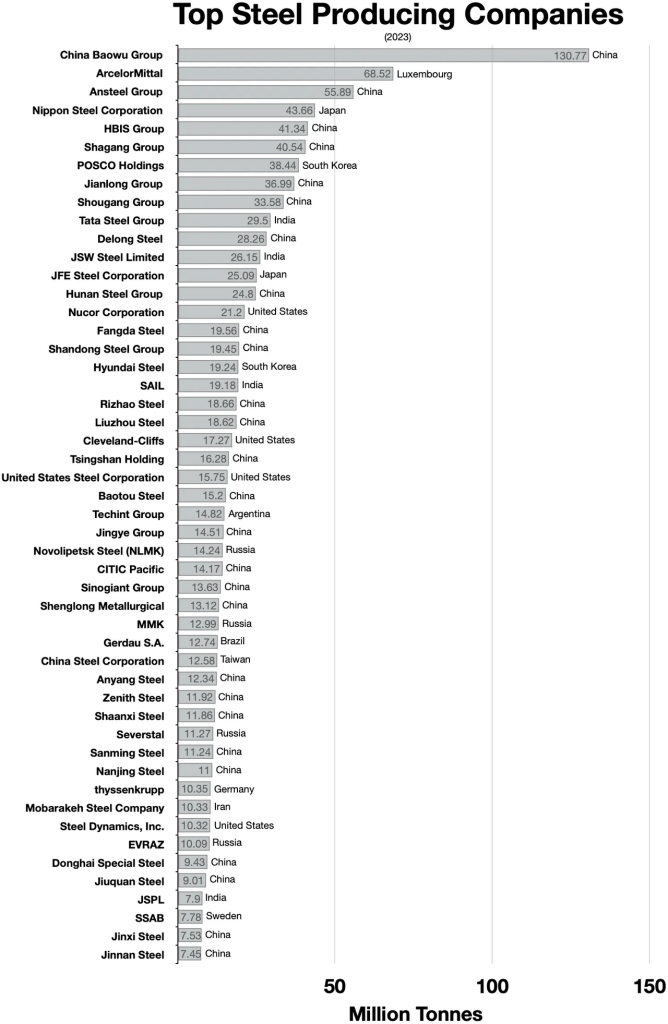
On December 18, 2023, Japanese steelmaker Nippon Steel Corporation (NSC), the world’s fourth-largest steel producer, made a bid to buy United States Steel Corporation (US Steel) for $14.9b.
Obviously, the US government balked at the prospect of handing over steel-making to a foreign company. On March 14, 2024, the Biden Administration opposed the acquisition. Former President Donald Trump also vowed to block the deal if re-elected.
But US Steel shareholders approved the deal in April 2024, with over 98% voting in favor.
In January 2025, activist investment company Ancora Holdings launched a proxy battle against US Steel, which would seek to end the Nippon Steel merger, replace Burritt as CEO, and pursue its own strategy to turn around the company instead of selling it to another buyer.
In the end, on May 23, 2025, President Trump announced a revised planned partnership, reversing his earlier opposition to the acquisition. Under the new terms, US Steel would maintain its headquarters in Pittsburgh and would be led by an American CEO with a board majority being US citizens. Additionally, the US government would receive a golden share allowing the US president to appoint one of three board members and providing veto authority over corporate decisions, including the appointment of the other board members.
After the deal was made, US Steel was delisted from the stock exchange, ending its 124 years of being a publicly traded company.
Nippon Steel became the second largest steel producer after the acquisition.
Post War Japan
Let’s turn back the clock and see how Nippon Steel emerged from WW2 after Japan was stripped bare of its industrial capabilities.
Although the Imperial Army was defeated, the Japanese people were ambitious and hardworking, and they were determined to rebuild their nation. So, from the wreckage, two powerful entities emerged, forged in the fires of reconstruction: Yawata Iron & Steel and Fuji Iron & Steel.
These weren’t merely companies; they were instruments of national survival, tasked with nothing less than resurrecting Japan’s industrial might.
Yawata, a name that echoed with imperial ambition, traced its roots back to 1901. Established as the Imperial Steel Works in Kitakyushu, it was a child of state patronage, strategically positioned near the coalfields of northern Kyushu. In its early days, Yawata leaned heavily on German technological expertise, importing technology from Gutehoffnungshütte. Initial stumbles gave way to triumph, and by 1904, Yawata was churning out steel, feeding the voracious appetite of the Imperial Japanese Navy and Army.
Fuji, in contrast, was created in 1950 from the dismantling by Allied Occupation authorities, it was a direct consequence of the anti-trust policies aimed at breaking up the powerful “Zaibatsu” conglomerates that had fueled Japan’s war machine (see here for more).
Headquartered in the modern Fuji Building in Tokyo, it was built from the remnants of the old, with key plants including the Kamaishi Steel Works and the strategically important Nagoya Works. The latter, acquired from Tokai Steel in 1967, allowed Fuji to directly satisfy the burgeoning demands of Toyota Motor and other industries clustered around Nagoya.
This focus on the needs of a rapidly modernizing consumer economy set Fuji apart.
Yawata was a creature of state and military, while Fuji was a partner to the rising industries of consumerism.
A catalyst would eventually merge these two entities together in 1970.
The Catalyst
Shigeo Nagano was born in 1900. He was a product of the elite, graduating from the prestigious Law Faculty of the University of Tokyo in 1924. He began his career at Asano Bussan before finding his calling at Fuji Steel in 1925.
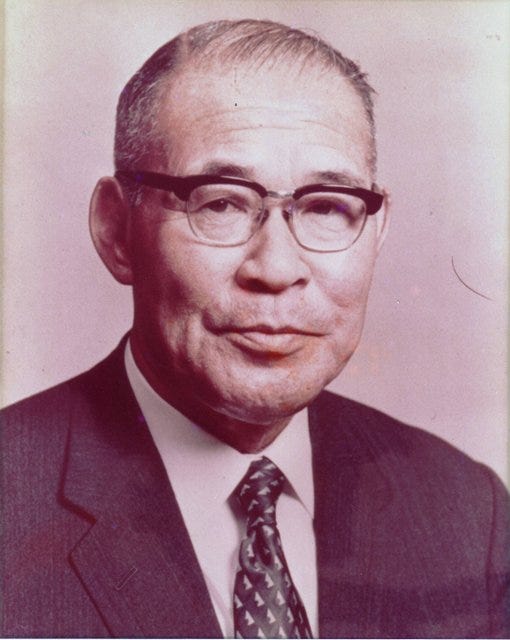
Over the next decade, Nagano’s star ascended. By 1933, he was a manager, successfully turning the struggling company into a profitable enterprise. After the Allied Occupation-era breakup, he became chairman of Fuji Iron & Steel in 1950, a position that gave him a unique perspective on the fragmented landscape of the Japanese steel industry.
In the face of rising foreign competition and domestic inefficiencies of duplicated production, Nagano envisioned a potential merger of Yawata and Fuji steel-making.
In 1969, under the encouragement of the Japanese government, Yawata and Fuji merged, creating the world’s second largest steel producer, only behind US Steel. The merger marked the start of big corporations consolidating in Japan. The new company was Shin-Nippon Seitetsu (New Nippon Steel), with Nagano at its helm as chairman, it hired 80,000 people in ten huge mills in Japan.
Nagano would retire as chairman in 1973 but continued as an advisor.
The Rise of Nippon Steel
Central to Nippon Steel’s rise was its embrace of Kaizen (改善); the philosophy of continuous improvement. It was a deeply ingrained cultural ethos that permeated every level of the organization. While specific, publicly documented case studies are scarce, the spirit of Kaizen manifested in countless incremental improvements, from optimizing furnace operations to streamlining production flows. Energy efficiency became a particular area of focus, with measures implemented to recover waste heat, improve process control, and ultimately reduce both costs and the company’s environmental footprint. This relentless drive of Kaizen became a defining characteristic of Nippon Steel.
Technology was at the forefront of Nippon Steel’s innovations. The company poured vast sums of money into R&D, pioneered new steel-making processes, and developed high-performance steel products that set new industry standards. They excelled in creating high-strength steel for the automotive industry, enabling the production of lighter, more fuel-efficient vehicles.
Their expertise extended to pipelines, offshore structures, and other demanding applications, consistently pushing the boundaries of what was possible with steel. This focus on proprietary technology became a cornerstone of their competitive advantage.
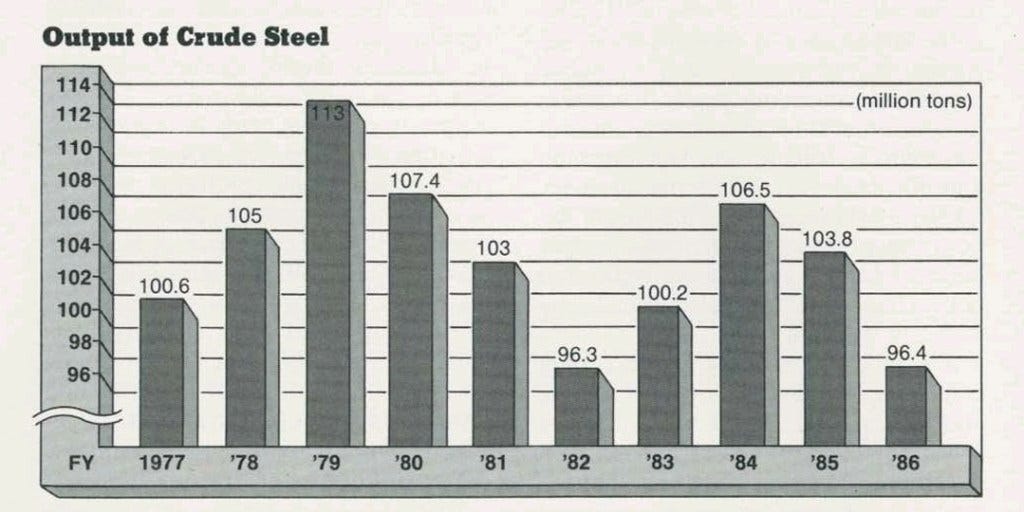
Japan’s economy went through hard times in the late 1980s, brought on by an exceptionally strong Yen of 162 against USD. Competition from Korea, Taiwan and Brazil have also chipped away at the competitiveness of Nippon Steel.
The CEO from 1987 to 1989 was Yutaka Takeda. He joined Nippon Steel in 1970 after the merger, while he was a director at Fuji since 1965.
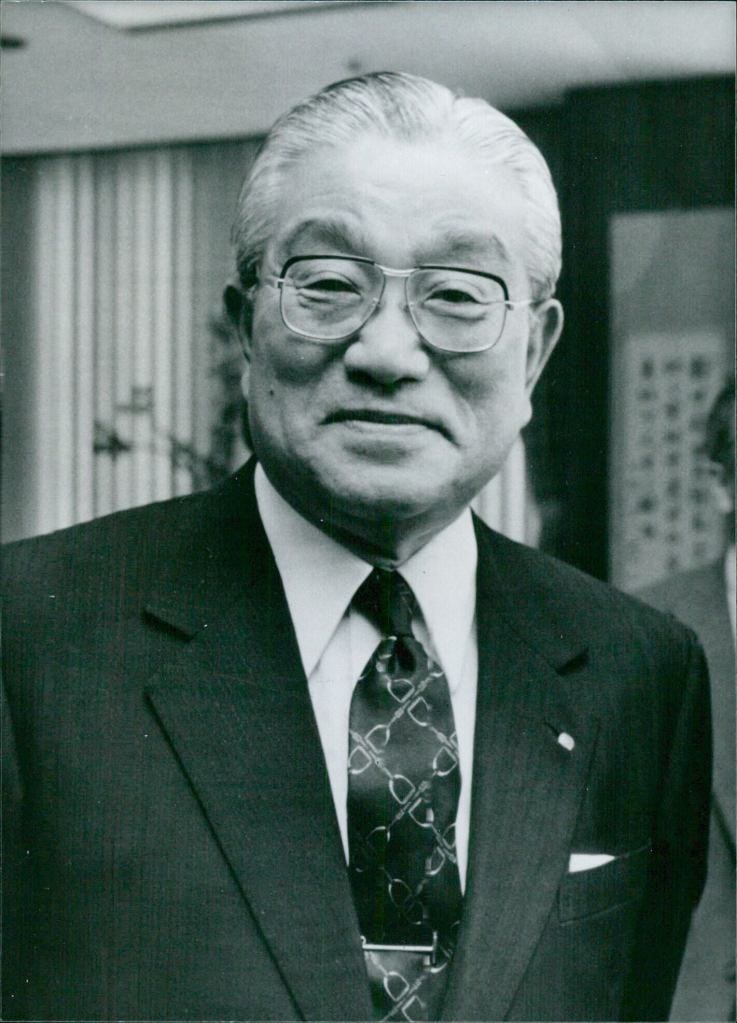
Challenged by the difficult situation, Yukata cut 19,000 of their 64,000 workforce in 1987 and planned to shut down 5 furnaces by 1990.
Nippon Steel also diversified away from steel. Among these were electronics production with Philips, making silicon wafers, and a joint venture with SunMicrosystems to produce mini computers. At one point they even went into the hotel business!
Global Investments
To further diversify away from domestic markets, Nippon Steel entered into many investments overseas. For example, the strategic investment in USIMINAS, a major Brazilian steel producer. This move provided Nippon Steel with valuable access to both the South American market and USIMINAS rich reserves of iron ore.
Similarly, the cross-shareholding agreement with POSCO of South Korea in 1998 facilitated collaboration on technology development and expanded market access. In 2024, Nippon Steel sold its POSCO stake to fund the US Steel acquisition. Then, POSCO also sold their Nippon Steel stake in early 2025 to fund its own restructuring.
In 2014, the establishment of Nippon Steel & Sumitomo Metal India, a joint venture with Tata Steel (51%) focused on producing automotive steel sheets. By partnering with local players, Nippon Steel was able to navigate the complexities of the Indian business environment and capitalize on the region’s rapid growth.
China Supply Shock
The early 2000s, China saw a large increase in steel-making capacity, partly reflecting an increase in the number of small and medium-sized firms; this growth in capacity translated into higher production, some of which flowed onto the international market. Since China’s accession to the World Trade Organization in 2001, the volume of steel exports has increased noticeably.
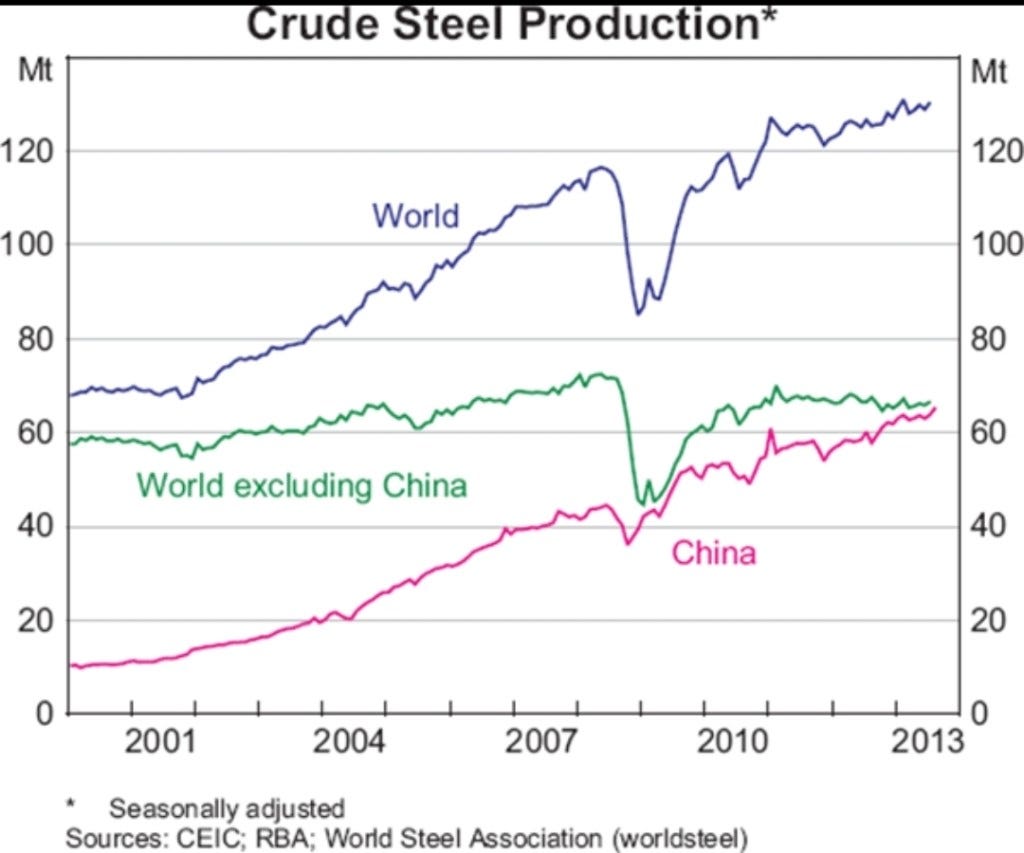
As a result of this over supply, prices of steel fell, and Nippon Steel found it increasingly difficult to compete with a nation that had labour cost advantages plus government subsidies.
Nippon Steel embarked on a series of restructuring efforts to reduce costs and improve efficiency. Older, less competitive plants were closed, and investments were directed towards modernizing existing facilities.
It also moved beyond commodity-grade steel and focused on higher value-added products. This included expanding into related businesses such as engineering, construction, and advanced materials, seeking to leverage its expertise and technological capabilities in new and profitable ways.
The US-China trade war, which escalated in the late 2010s, added another layer of complexity to the situation. While tariffs on steel imports provided some protection for domestic producers, they also disrupted global supply chains and created uncertainty for exporters like Nippon Steel.
In August 2024, Nippon Steel quietly dissolved its joint venture with China’s Baoshan Iron & Steel. While not widely publicized, this move reduced Nippon Steel’s production capacity in China by a substantial 70%.
Fast forward to 2020, China’s Baowu Group became the world’s largest steel producer.
Finally, all these competitive pressures culminated into the US Steel acquisition.
Final notes…
The story of Nippon Steel is more than just the story of a company; it is a reflection of Japan’s own journey from post-war devastation to global economic power. For over a century, this industrial titan has been at the forefront of innovation, driving technological advancements and contributing to the development of modern infrastructure worldwide.