
History: Mars Chocolate
Candy Childhood
It’s the year 1883, Luther Mars and Elva Holton came from Pennsylvania to Minnesota to make a living off agriculture. Luther worked as a gristmill operator, that’s the person who turns a large stone wheel, which grinds corn, wheat, and other grains into flour.
Then, in September 24, 1884, Luther and Elva Mars had their first child together. They named him Franklin Clarence Mars.
Life back then was tough. Not only was farming hard work, but it didn’t pay a lot of money. Without money, the Mars family lacked access to clean drinking water, food, and good shelter.
When Franklin was a young child, he developed a case of polio, which made it difficult for him to walk. That was a problem because back then, the most popular form of transportation for getting to school was walking.
His mother then decided to homeschool her son in the kitchen.
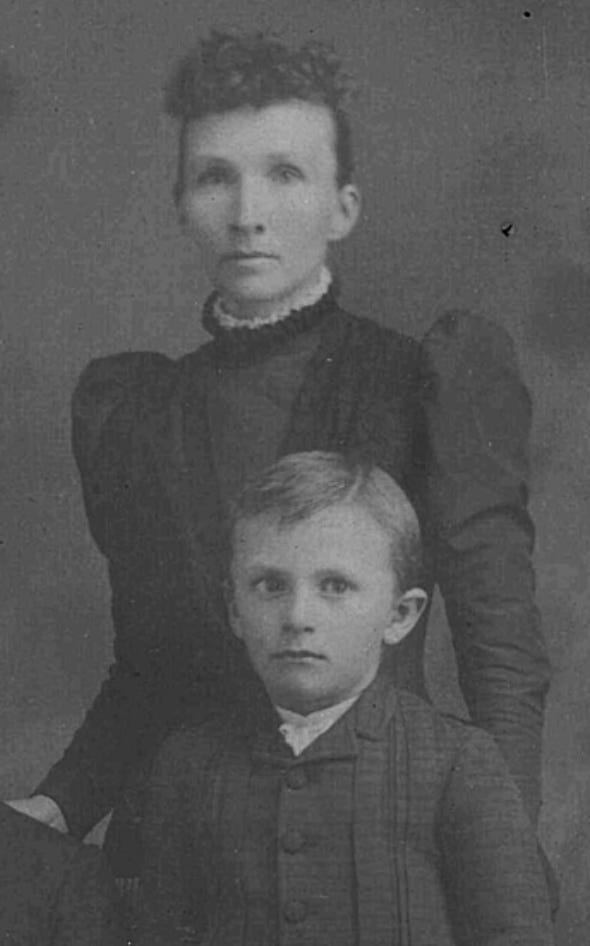
Young Franklin loved candy and apart from reading, writing and arithmetic, his mother would teach him how to make candy.
As Franklin got older, he learned to walk with the help of a cane. Eventually he was able to finish his education at the neighbourhood school. By that time, he had already been experimenting with different flavor combinations and methods for making candy.
In fact, at age 19, Franklin created a candy product that he marketed as Taylor’s molasses chips, which were bits of molasses shaped into honey cones and dipped in chocolate. He made the first sale of his new candy bar in 1902.
That same year, he married Ethel Kissack and two years later, the couple had their first son named Forrest Mars.
Business & Marriage Fails
Since Franklin didn’t have a lot of money, it was a struggle to keep his new candy business afloat.
So his first business went bust and he found a job as a salesman with a small company located in Wadena, which is where the family of three moved to set up their new home.
Ethel was fed up with Franklin not being able to provide for the family, and in 1910, just 4 years after marriage, she filed for divorce with the custody of their 6 year old son Forrest going to her. She then sent Forrest to live with his grandparents in Saskatchewan, where he would spend most of his youth enduring a very strict, Episcopalian upbringing.
In the same year that he divorced, Franklin married his second wife who coincidentally was also named Ethel Veronica Healy.
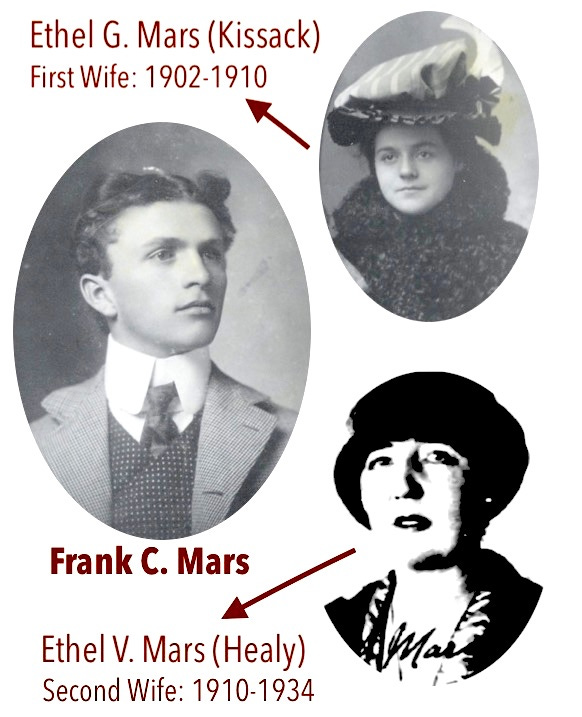
One year later in 1911, the new couple moved to Tacoma, Washington where they set up The Mars Corporation.
They only had one daughter named Patricia in 1914.
Franklin began making candy at home again with the help of his wife. The couple made a buttercream candy with a soft creamy filling encased by a rich chocolate exterior. Yet despite having created a high quality, delicious tasting candy bar, it produced very little in sales.
The business couldn’t pay off its debts and also went bust. So in 1920, Franklin made the decision to move back to his home state, Minnesota.
Third Time’s a Charm
After two business failures, Franklin wasn’t ready to give up. He set up another business adventure, which he named the Mar-O-Bar Company.
This time, he blended together two pieces of thin cookies covered with chocolate with whipped cream in the middle.
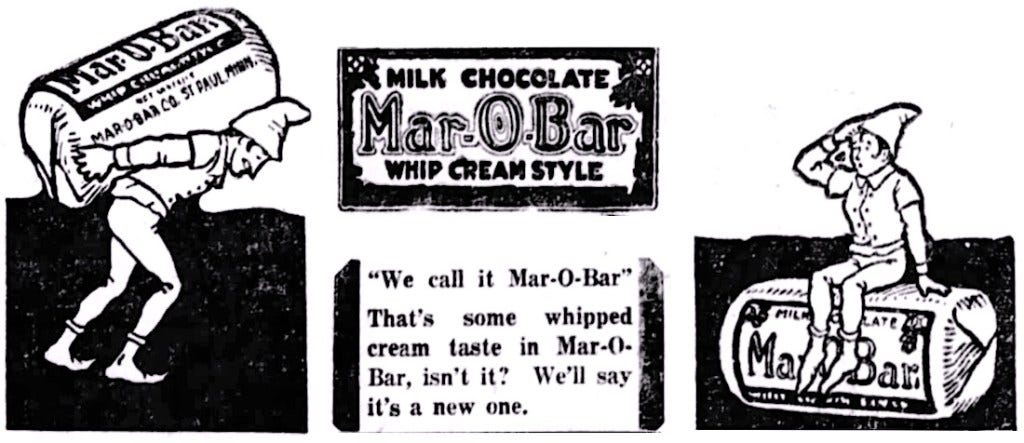
They say it’s hard to fail thrice in a row… this candy bar achieved a great success, producing roughly $100,000 in sales. It seems Franklin had finally made a mark into the candy industry.
However, there was one problem with Mar-O-Bar, it would often crack during transportation. Franklin would find his solution in an unexpected way.
Milky Way Bar
Remember Forrest Mars who was sent to Canada? He was a smart kid and did well in school. After graduating, he returned back to the US where he studied at the University of California and then onto Yale University, graduating with a degree in industrial engineering.
Things were looking good for Forrest until he was arrested in Chicago for affixing Camel cigarette ads along street lampposts without permission. And he also owed people money which he never returned.
Needing someone to bail him out, Forrest called his father for help. Franklin put up the bail for his son to get out of jail.
Afterwards the two decided to have a milkshake in a soda shop. Forrest would suggest to put milkshake into a candy bar.
Then, Franklin went straight back to Minneapolis and started working on creating a candy bar that tasted like a malted milkshake. This was called: Milky Way Bar.
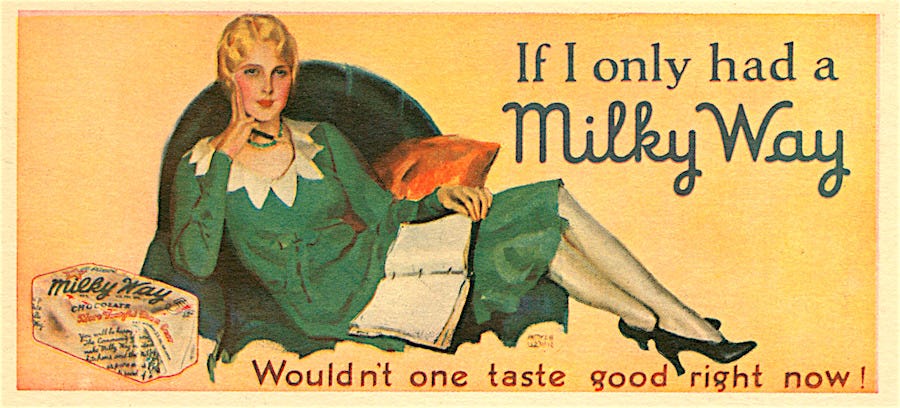
He introduced the new candy bar into the market in 1923 and it was a big hit. Sales skyrocketed, immediately generating $69,000 in sales. The following year, the Milky Way bar exploded in popularity, selling over $800,000.
This single candy bar opened the doors for his company to be recognized. This was also when the business got its present name, and in 1926, Franklin renamed his company Mars Inc.
That same year, he moved the business to a new plant outside Chicago where he created two more new candy bars: Mars Almond bar and Three Musketeers.
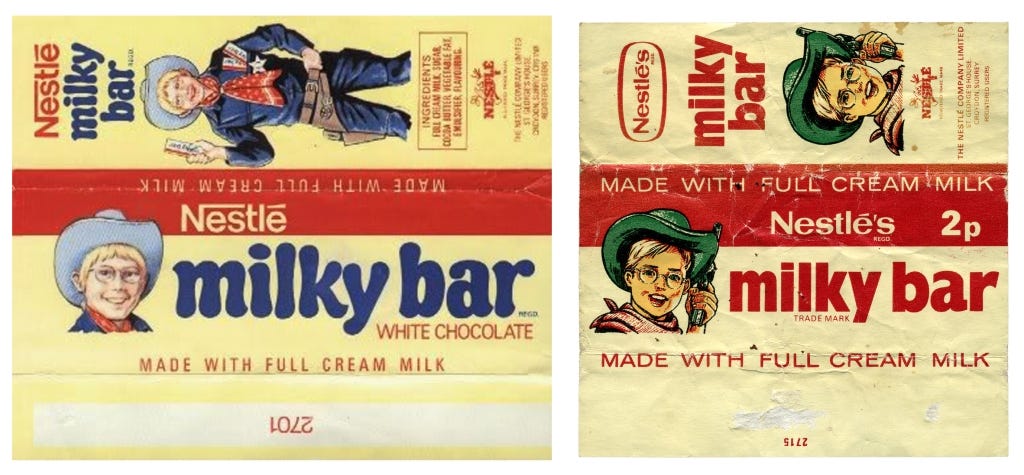
Don’t be confused with Nestlé Milkybar! They are different. Milkybar was introduced in UK and Switzerland in 1936.
A horse named Snickers
After some success, the Mars family grew wealthy enough to indulge in their love for horse racing. Franklin had bought a farm in Tennessee with 30 stables where he and Ethel raised horses, it was aptly named Milky Way Farm Stable. He even built a racing track because Ethel loved horse racing.
Ethel felt one of her horses named Gallahadion was fast enough to compete in one of the country’s most cherished races: the Kentucky Derby.
And so Gallahadion entered the field with eight other horses. It was considered an outsider and was not expected to win. All eyes were on Bimelech, which was the favorite.
But Gallahadion actually won the race!
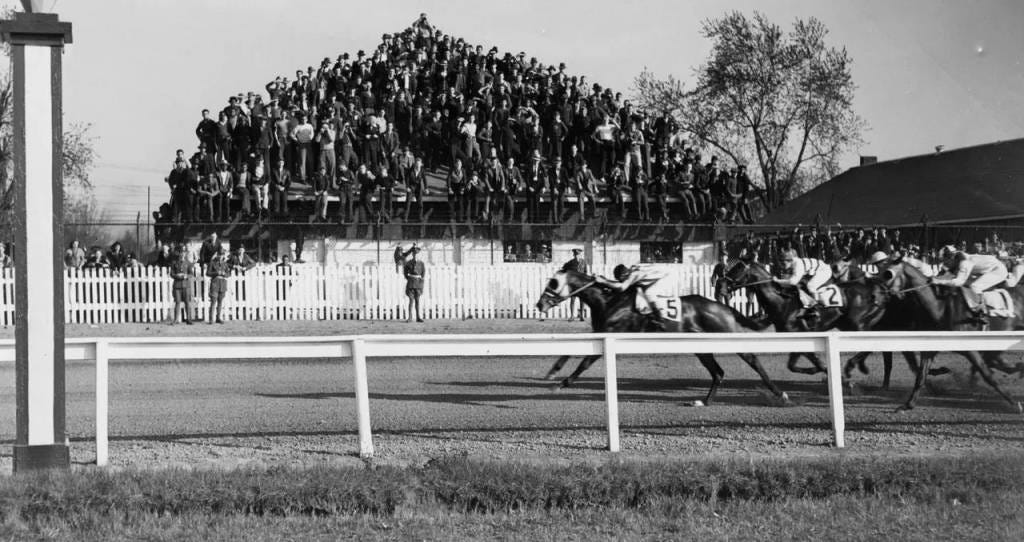
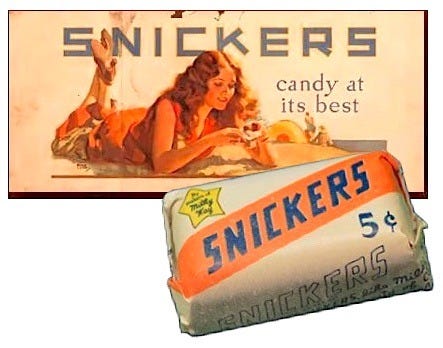
Delighted by her instincts for horses, Ethel suggested to name the next candy bar after their family’s favourite horse Snickers.
Initially sold for five cents, the bar consists of peanuts, nougat, and caramel, all coated in milk chocolate. Of course, Snickers became a huge success and remains a popular household name today.
Mars Chocolate Bar
At this point in time, Forrest returned to work with his father. But a series of business disagreements happened and Franklin gave $50,000 and the rights to produce Milky Way to Forrest, telling him to set up his own venture.
So Forrest went across the Atlantic and in 1932, he opened up a factory in Slough England, adjusted the Milky Way recipe to better suit European tastes and began making the new bars.
However, in the early days of production he lacked the machinery needed to create his own chocolate coat. Until his fledgling company was able to produce its own chocolate, the famous Cadbury Dairy Milk was used to coat the candy.
Forrest launched the new chocolate bar to his English audience under the brand name Mars.
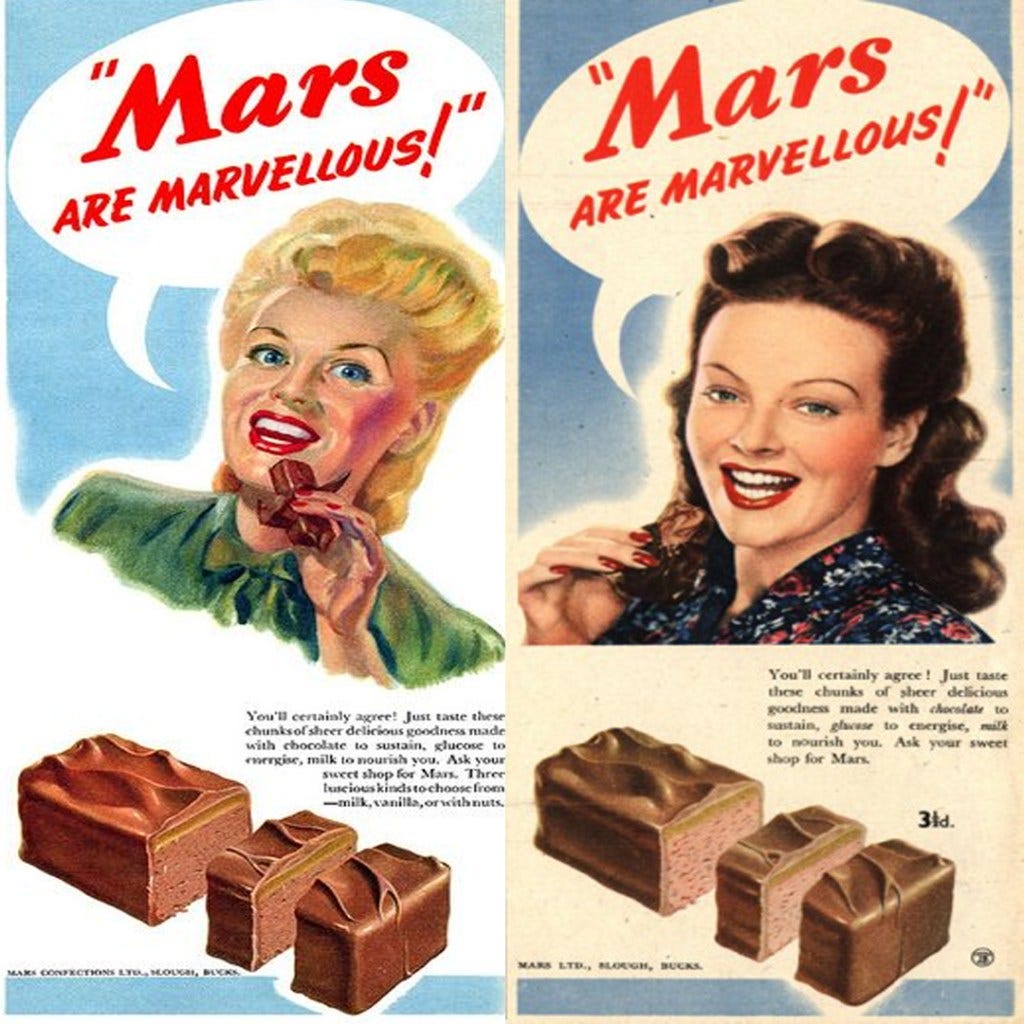
World War 2 (WW2) came to Europe, and the Mars bar was widely consumed among soldiers as it provided a boost in calories.
Mars & Murrie
It must have been eating too much sugar, but shortly after the launch of Snickers in 1930, Franklin Mars died of heart and kidney problems in 1934. Forrest came back and took over operations at the confectionary.
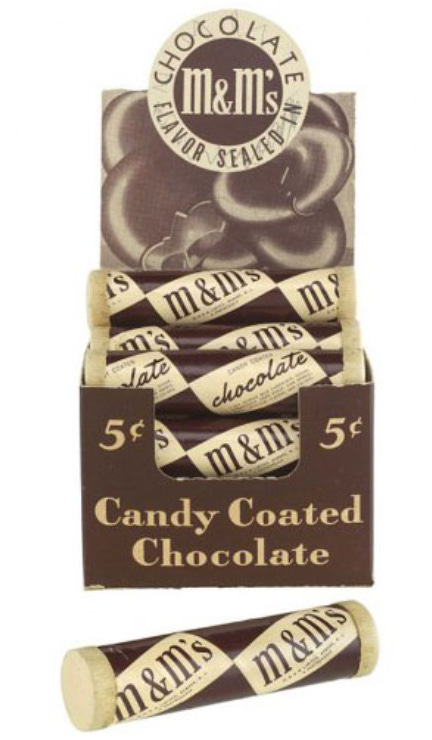
Success doesn’t come without competition. Hershey’s was their biggest rival, but oddly enough they also partnered to create the popular M&Ms.
In fact, Mars was one of Hershey’s biggest customers, purchasing as much as $7.5 million in chocolate coating per year.
One of the problems that chocolate candy makers faced in the summer months was that the chocolate melted quickly. For customers, it was a problem because the melted chocolate got on their hands and clothes. For both Mars and Hershey’s, it meant sales fell off during summer. But at the time, neither company had a solution until the Spanish Civil War broke out.
In 1936, Forrest Mars was traveling through Spain and saw British soldiers eating chocolate pellets with a hard sugar coating that prevented them from melting. Forrest was excited by the idea of creating a candy that could withstand warm temperatures.
He returned home and partnered with Hershey’s to create a hardened chocolate shell. They called it M&Ms. The two M’s stand for the last names: Forrest Mars and Bruce Murrie, the son of Hershey’s President.
The design for the candy was patented on March 3, 1941, and production began in Newark, New Jersey.
During WW2, the importance of chocolate as a calorie boost is well documented. Many soldiers ate M&Ms as part of their rations. By the late 1940s, M&Ms were widely available to the public. The popular slogan, “It melts in your mouth, not in your hands” was trademarked in 1954.
The Mars Legacy
With the experience from Europe, Forrest began expanding Mars into other food categories. One of them is the famous Whiskas cat food and Pedigree dog food.
He also kept innovating and came up with products like Skittles and Starburst.
His goal was to ensure that every confectionary aisle in every grocery store would be stocked with the company’s products.
After the death of Forrest in 1999, his three children, Jacqueline, John, and Forrest Jr. inherited a stake in Mars Inc., with Jacqueline and John continuing to co-own the company.
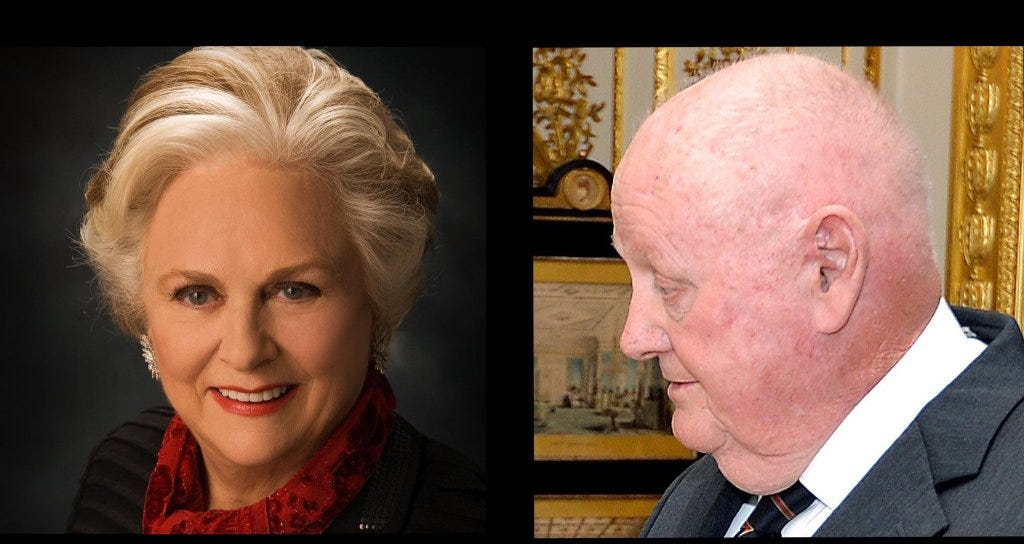
The Mars Corporation now owns over 50 popular brands. It remains a private family owned company since 1911.
Today, the legacy of Franklin Mars lives on strong, and the Mars family is the second wealthiest family in America at an estimated $126 billion.