
History: Li Lu
A Tough Childhood
Li Lu, through his investment firm, Himalaya Capital, produced annualized returns exceeding 30% in the first decade since 1998, and nearly 20% over the two decades until 2017.
He was also the man who rejected a job offer from Buffett and Munger to head the investment department at Berkshire.
He so liked being a principal instead of being an agent working for somebody else. That was immediately obvious to me and, of course, that’s how I am. So, I naturally had considerable sympathy for him. I tried to get him to work at Berkshire, but I was fighting against nature.
Charlie Munger on Li Lu
His story is a fascinating tale of luck, wit and determination. After escaping from the Tiananmen tradegy in China, virtually penniless and not speaking a word of English, Li Lu arrived in the US in late 1989, at the age of 23.
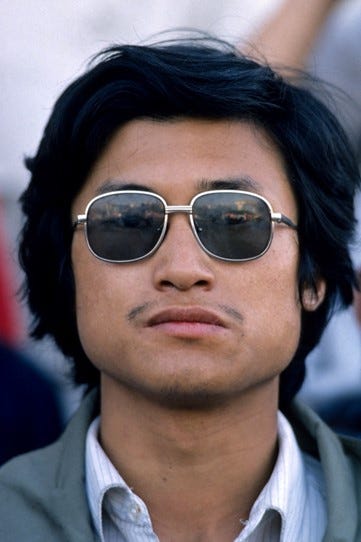
Li Lu was born in April 1966 under the Cultural Revolution regime of Mao ZeDong.
When he was only nine months old, his father, an engineer, was sent to a coalmine to be “re-educated”, while his mother was sent to a labor camp. Li Lu spent his childhood between caretakers and an orphanage. By the age of 10, he survived a catastrophic earthquake in Tangshan, which killed 240,000 people, including all the members of his adoptive family.
In 1976, he managed to reunite with his parents and two brothers. But his many friends died in the earthquake, and Li Lu sank into a deep depression. He became disengaged, and frequently engaged in street fights.
However, his grandmother told him that while he had a sense of justice, real fights could not be won with brawn alone, but required the use of the brain, so that education was the only way to achieve justice.
I was careful not to be influenced by emotions that I know are poisonous and counter-productive to the journey I want to take; things like envy, resentment, hatred, jealousy, greed and self-pity. I certainly wasn’t born with immunity to this side of human nature. In fact, my early life experiences may require me to work even harder than others to guard against these human vulnerabilities.
Li Lu
Li Lu was fascinated by his grandfather, who received his PhD from Columbia University. He never had the chance to meet him but read his writings extensively.
Motivated by these events, Li Lu went on to study Physics at the prestigious Nanjing University, later transferring to Economics.
Escaping from China
Like many intellectuals during his time in China, they believed the way out of the authoritarian political system and rigid command economy was to open up to the ideals of academic freedom, freedom of speech and freedom of the press that is associated with the West.
In the Tiananmen protest, Li Lu played a key role in organizing the student movement, including a hunger strike, and he served as deputy commander-in-chief in the square. Then, in the early hours of June 4, 1989, the Tiananmen massacre took place with army troops opening fire on activists. The government listed 21 students as wanted, Li Lu was one of them.
So he went into hiding and planned to flee Beijing for France, via an old smuggling route in Hong Kong.
In late 1989, he was granted asylum in the US, and that was how Li Lu ended up in America. Using connections from his grandfather, he enrolled in Columbia Business School.
Li Lu’s first challenge was to learn English at summer school, where he studied for 12 hours every day. Demonstrating his intense commitment and abilities, Li Lu quickly learned the language over one summer.
The Free Buffet
Like many other students burdened with college loans, Li Lu was on the constant lookout for two things: money and food.
One day, a fellow student gave him a flyer. A wealthy guest lecturer was coming to give a speech about making money.
Li Lu decided to go after noticing on the flyer that a buffet was offered.
When he arrived in the classroom, he noticed that the long tables that would typically serve buffets were missing.
He asked his classmate where the food was, and the classmate told him that was the speaker’s name.
Since this guy dared to call himself “Mr Free Lunch”, I reckoned he must know something, so I sat down and listened. After a while, I felt suddenly what he was saying was far better than a free lunch.
Li Lu
As it turns out, Li Lu still picking up the English language then had missed the extra ‘t’ in the speaker’s name. He had stumbled on to a speech by none other than Warren Buffett.
After listening to the clear principles of investing that Buffett preached, Li Lu was drawn to the possibility of making money through buying businesses that were deeply undervalued.
Immediately after the lecture, he ran to the library to study more of Buffett’s teachings, starting from P/E and P/B ratios, making extensive use of Value Line.
However, Li Lu realized that for the first batch of companies he looked at, he did not understand their businesses well enough, only that they did not seem to be losing money.
To do the real groundwork, he visited a few companies near New York. Only then did he muster enough confidence to buy those stocks.
He improved his methodology by more carefully researching and understanding the businesses that the stocks represented. The more he studied, the more confident he grew.
Using the student loans that were paid upfront, Li Lu invested his student loan float into the stock market. By the time he graduated, he had made $125,000 when the average annual salary in China was $800.
Li Lu felt he could retire, but that was just the start. He clerked for a District Judge, then interned at a law firm and then with an investment firm Allen & Company.
In 1996, after 6 years at Columbia University, Li Lu became the first student to simultaneously graduate with three degrees: a bachelor’s in Economics, an MBA, and a JD (Juris Doctor).
Revolutionist to Capitalist
Due to his various achievements, Li Lu had his pick of offers, and decided to start in investment banking with Donaldson, Lufkin & Jenrette (later acquired by Credit Suisse).
On a fateful flight from San Francisco to New York, he came across Rena Shulsky, a NY based real estate mogul, whom he met previously while giving a lecture.
She saw his potential and gave him $2 million in seed money. In 1997, with a sum of investors’ funds, he quit his job to start his own firm, Himalaya Capital. Famed investors such as Jerome Kohlberg (the first ‘K’ in KKR) lined up to put in their money with Li Lu.
This fund focused on opportunities in China, which was a lucrative hunting ground. During this time, Western investors had difficulty understanding Chinese businesses, and China was experiencing rapid economic growth.
However, the Asian Financial Crisis would hit in 1997, the very first year Li Lu set up shop. The fund suffered a loss of 19% while the US index returned +31% in 1997 and +27% in 1998. To them, Li Lu underperformed by a huge margin.
Some investors pulled out, but in 1999, Li Lu would make it all back after the emerging economies shook off the crisis and rebounded.
Even better, the US stock market crashed after the dot-com bubble burst, and his fund outperformed significantly due to his value investing approach.
In 2003, Li Lu was invited to the home of another human rights activist for Thanksgiving. Her husband was Ronald Olson, a director for Berkshire Hathaway. As it turns out, Charlie Munger was also present.
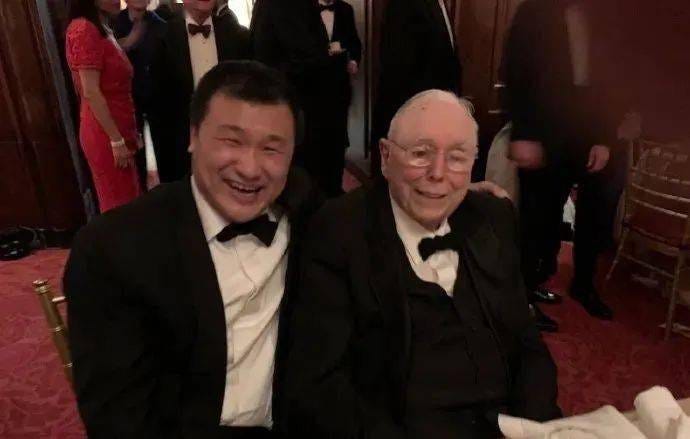
Li Lu explained and described the business of every single stock he bought to Munger and asked for his advice to the problems of running an investment fund.
They talked late into the night and Munger was so impressed with Li Lu that he invested $80 million.
With this new found money, Li Lu turned it into $400 million.
I’ve read Barron’s for 50 years. In 50 years, I found one investment opportunity in Barron’s, out of which I made about $80 million. For almost no risk. I took the $80 million and gave it to Li Lu, who turned it into $400 million or $500 million.
Charlie Munger, 2017 Daily Journal AGM
Note: The investment that made $80m was Tenneco, a good deep value study on its own!
Later in 2008, Li Lu introduced the EV car maker BYD to Munger and Buffett, which multiplied Berkshire’s initial investment of $225 million by at least 30x before they started taking profits in August 2022.
In 2010, Li Lu translated Poor Charlie’s Almanack for the Chinese audience and, in 2020, he published a book for value investing in China.
Recently, after Charlie Munger’s death in 2023, he wrote a eulogy remembering his friend and mentor. 20 years have passed quickly since their first meeting in 2003. Unfortunately, a few months after that, his eldest daughter died from a tragic hiking accident at the young age of 21.
Himalaya Capital currently manages $17 billion of assets. These days, Li Lu doesn’t actively solicit new investors, having found a steady stream of high-net-worth individuals and pension funds. Many of them gather in Omaha every year for the Berkshire Hathaway general meeting. Much of his personal wealth is still tied up in the fund.