
History: Chicken Mania
Intro
The history of finance has many stories of speculative mania that centered around commodities. Most people are familiar with the Tulip Mania (1634 – 1637), but today we will take a look at a financial bubble caused by chickens. This happened in the middle of the 19th century, when exotic breeds of chicken kicked off a speculative episode in America.
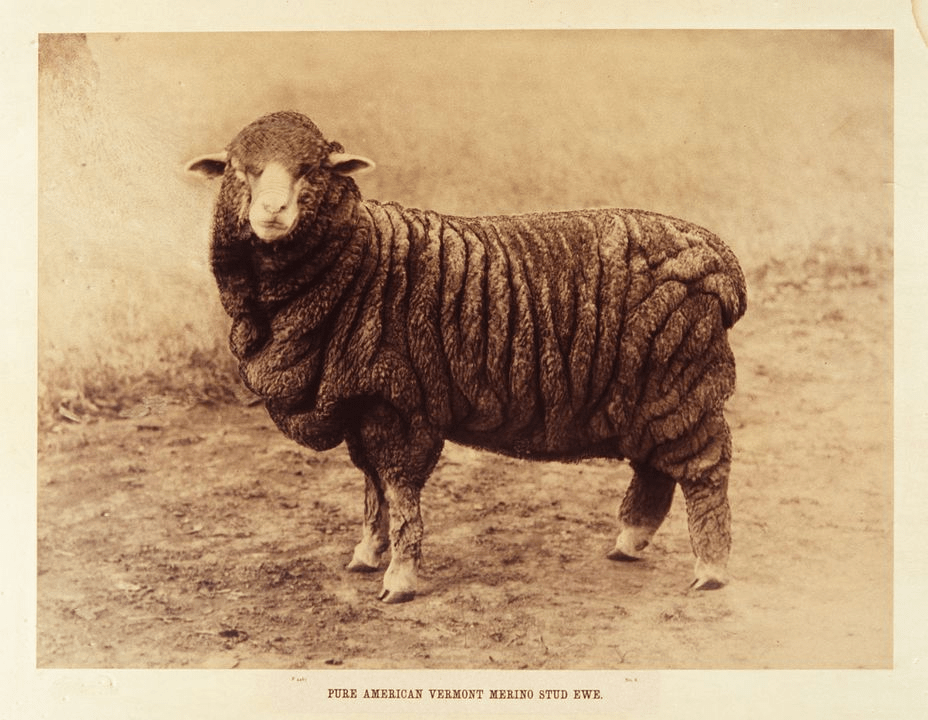
Between independence and the American Civil War, the US saw a series of speculative manias around agricultural commodities. One of them was Merino sheeps, between 1807 and 1810, the market value of a Merino lamb increased by 10 times and led to massive increase in sheep farming causing a surge in land prices for pasture. Sea captains on European or Mediterranean routes were given instructions to keep an eye out for these sheep while near Spain and North Africa. This boom ended when imports of Merino sheep rose and their scarcity in North America ceased.
Later in 1830s, Chinese Mulberry trees became the hot commodity. Mulberry trees were sought after as feed for silkworms during a time when America were introducing legislation to promote the creation of a silk industry.
But the most fascinating speculation would be the Chicken Mania. Three people most responsible for kicking off this mania was Edward Belcher, Queen Victoria, and George Burnham.
Edward Belcher & Queen Victoria
Our first character, Edward Belcher, was a ship captain who left England for a circum-navigation of the world in 1836. However, he was interrupted by the First Opium War in which he participated, commanding two ships and seizing the port of Hong Kong.
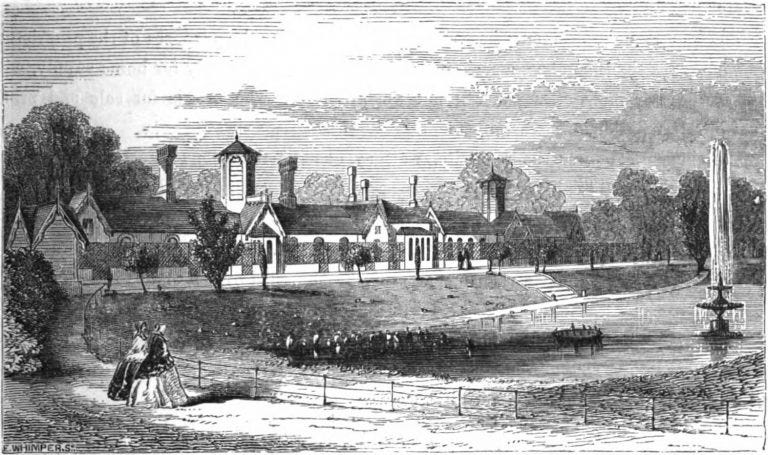
During that time in South East Asia, “Cochin-China” was the name given to the southern part of Vietnam during the French colonial period. Belcher then bought home some Cochin-China chickens to England in 1842. He gifted five hens and two roosters to Queen Victoria, who had built an aviary not long before and was always a keen collector of foreign animals.
These foreign chickens left a good impression; they were larger, calmer and more elegant than English chickens. The Queen and her fellow countrymen had never seen anything like these birds before. With their slender legs, elongated necks, and vibrant auburn feathers, with the ending flourish of a green-black tail, these elegant Asian fowl made quite the contrast to the scruffy chickens native to the British Isles. The Queen would spend hours luxuriating in the poultry house over tea.
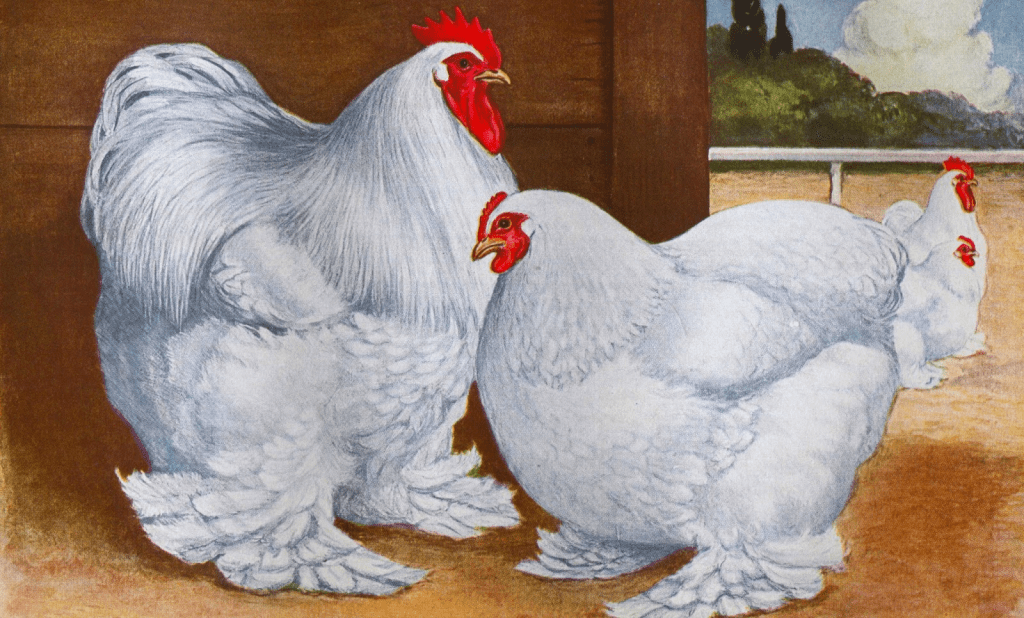
The Queen gifted offsprings to relatives abroad and sent a pair of Cochin-China chickens to the Dublin Cattle Show in April 1846. They had hoped that these larger chickens could solve the Irish famine (1845 – 1852). While these chickens didn’t solve the famine, fascination with them grew, especially among poultry fanciers who raised and collected their own birds.
Back in Britain, sales of Cochin-China chickens were starting to see a dramatic increase in the late 1840s to early 1850s. In 1849, the chickens were imported into the US and there was where the speculative mania took hold.
George Burnham
Enter George Burnham, a Massachusetts newspaperman and poultry breeder. He got into the trade in 1849, the same year the chickens were introduced at the first ever Exhibition of Fancy Poultry in Boston’s Public Garden. In America, up to then, raising chickens was largely done on a small scale for eggs, mostly in New England. There was no large-scale industry raising chicken for meat.
Cochin-China chickens were soon featured in shows around the country with other novel breeds. The people attending these shows weren’t restricted to farmers, the diverse middle class not involved in agriculture were also involved.
Some 20,000 people attended the subsequent Exhibition of Fancy Poultry in 1850. That year, Burnham was selling his chickens for $25 per pair and eggs for $1 each ($1 in 1850 = $30 today)! On an estate he purchased with this newfound income, Burnham was raising over a thousand birds by 1851.
By the way, Exhibition of Fancy Poultry is still an ongoing event today hosted by the American Poultry Association in various states like Ohio, California and Iowa.
But this was just the beginning; the desire to possess, breed and showcase fancy chickens had spread from Britain to everywhere in the US. Prominent men, like the Governor of Massachusetts George N. Briggs, were gifted Cochin-China chickens by Burnham. Quoting a letter by him to Burnham:
My Dear Sir:
The cage of Cochin-China chickens you were kind enough to send, reached me in safety; and I am much obliged to you for this favor.
They are, beyond comparison, the finest domestic fowls I have ever seen, and I shall breed them with such care that I hope to be able to give you a good account of them in the future.
They are very much liked by all who have seen them, and you will please accept my thanks for your attention.
New breeds also emerged including one called the Brahma, of which Burnham sent a handful to Queen Victoria, a gift reported in the London Illustrated News in January 1852.
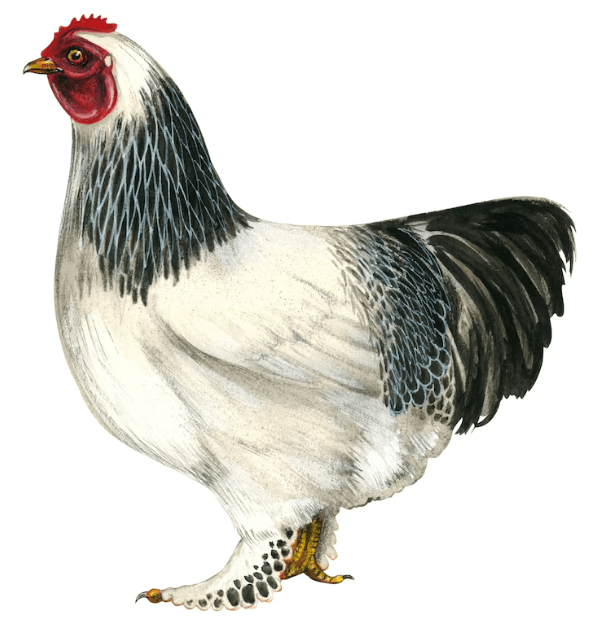
For the first time in America’s history, the chicken was important, where before the bird was so lowly that landowners neglected to record it as property in their farms. Prices of fancy chickens rose to over $100 per pair ($3,000 in today’s money). Some pairs of chickens were sold for as much as $700.
Here’s another letter from Henry Clay (US Senator, Kentucky) praising the beauties:
My Dear Sir:
I duly received your obliging letter, informing me that you had sent by the Express of Messrs. Adams & Co. a cage containing four fowls for me, and I postponed acknowledging it until the fate of the fowls should be ascertained. I have now the satisfaction to advise you that they all reached here safely.
They have been greatly admired, not only for their enormous size, but for their fine proportions and beautiful plumage. I thank you, my dear sir, most cordially, for this very acceptable present. It has been my aim, for many years, to collect at this place the best improved breeds of the horse, the cow, the sheep, swine and the ass though the last, not the least valuable, in this mule-raising state.
To my stock on hand your splendid Cochin-China fowls will be a congenial and valuable addition; and, if we succeed with them, I will take care not to monopolize the benefit of them. I am greatly obliged to you.
Bubble Pops
Of course, anyone should’ve seen this coming; a Cochin-China chicken can produce 150 to 200 offsprings a year and soon the public’s fascination with this exotic bird was no more. By 1855, it was no longer profitable to bring new birds from Asia and local breeders were stuck with unwanted chickens.
To offload their chickens, some promoters came up with new dishes on how to cook these birds. Burnham actually harvested one more fruit out of the bubble by writing a book (The History of the Hen Fever, A Humorous Record) about the mania and his role in its formation.
The Chicken Mania did have some positive consequences, their large size allowed them to be raised for meat rather than primarily for eggs. Before the 19th century, chicken was a luxury meal for special occasions, as raising sheep and cattle were the more economical choice for American farmers. It wasn’t until the 1920s that the US began to develop a large industry raising chickens.
Although the financial mania was foolish, the events did give rise to a new industry and a new diet.
Today, a significant portion of the world’s chicken breeds are at risk of extinction; reports have indicated that nearly 30% of chicken breeds are endangered. This decline is primarily due to modern agricultural practices that favor a limited number of high-yielding breeds for mass meat and egg production.
Maybe it’s time to under those green tail feathers again…